
When you hear "AI startup," you probably picture a software team and a stack of laptops. Not a chiropractor.
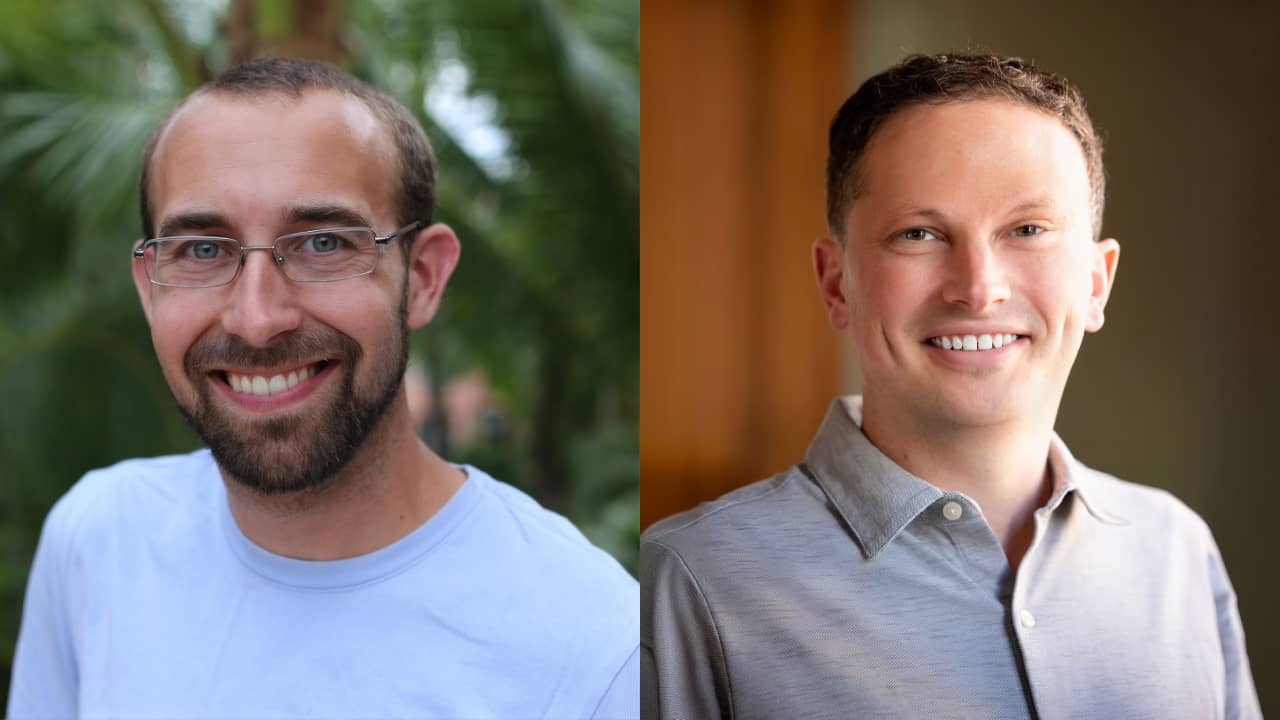
MyoWorks started with one. Dr. Jeremy Quick practiced chiropractic for more than a decade before he started building smart therapy devices for the people who do that work. On November 11, Beloit-based Mastercraft Ventures announced it has invested in the Windsor company.
How did a chiropractor end up building hardware?
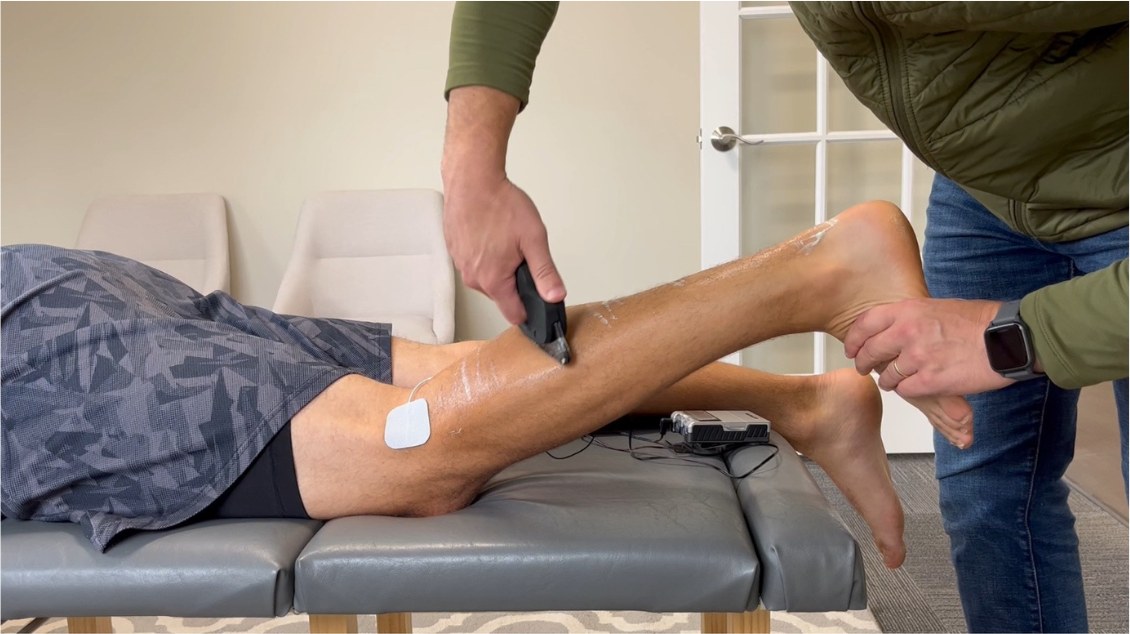
It started with a tool his patients didn't like. Traditional soft tissue tools were uncomfortable, so Jeremy tried something different: combining treatment methods that are normally done one after another.
They turned out to work better together. Patients noticed. He started hearing some version of "I don't know about that tool you are using, but that thing is great." And he credits the approach with helping grow his practice revenue by 20%.
Then he hit the next question. If the new method was working, he needed to know why.
“If I'm doing something different, then I need to be tracking how I'm doing it differently, why, and what the result is.”
- Jeremy Quick, Co-Founder and CEO, MyoWorks
That's where Joe Scanlin came in. Joe is MyoWorks' technical co-founder, and he's done this before: he founded and exited Scanalytics. He's originally from the Madison area and now lives in Michigan.
MyoWorks didn't start as a pitch deck about the chiropractic market. It started as a workaround one practitioner built for his own patients, and then proved out in his own clinic.
What does MyoWorks actually build?
MyoWorks makes smart therapy devices paired with software, built for chiropractors, physical therapists, and other musculoskeletal care providers.
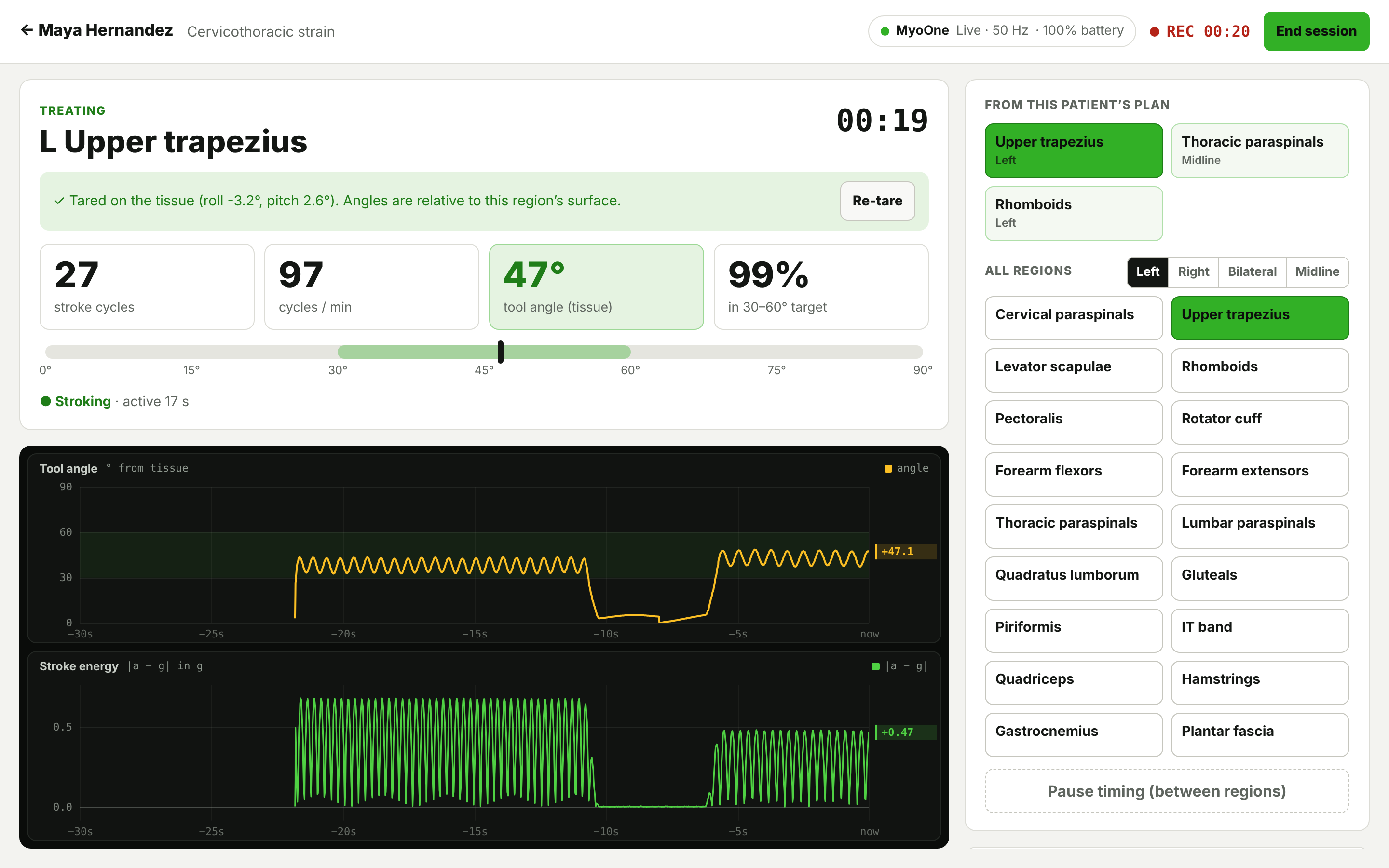
In practice, it works like this. The provider opens the software and pairs it with their device. During treatment, it records how the device is used, asks where it was used, and logs the time. Afterward, it combines that with the patient's subjective feedback to build the SOAP note providers have to write after every visit.
“It builds that afterwards for you, so you're done once you're done.”
- Jeremy Quick, Co-Founder and CEO, MyoWorks
It also tracks how each patient progresses over time. And at the next visit, it shows the provider exactly what they did and where they did it last time, so they can adjust based on whether the patient is getting better or worse.

Why do chiropractic practices hit a ceiling?
Most chiropractic practices are small and independent. The field is fragmented, and every practitioner runs into the same limit: hours in the day.
Growth comes from two places. See more patients, or generate more revenue per visit. Both run straight into the clock.
On top of that, most treatment tools record almost nothing about what happened during a session. The treatment happens, and then the only record is whatever the provider writes down afterward.
Jeremy thinks a lot of software built for this space misses the reality of that schedule.
“If you don't know what a chiropractor's day looks like (visit after visit after visit), then it's really hard to develop something that actually fits and isn't really clunky in its application.”
- Jeremy Quick, Co-Founder and CEO, MyoWorks
Why did Mastercraft Ventures invest?
Mastercraft puts MyoWorks in a category called physical AI: smart hardware and software working together. In its announcement, the firm points to a PwC projection that the physical AI market could reach $450 billion by 2030.
But the thesis is really about data.
A software-only company can only work with what someone types into it. A company that builds both the instrument and the software running it gets the data at the source. Over time, that becomes a dataset a software-only competitor will have a hard time copying.
“The opportunity is not just smarter tools, but the data they can create.”
- Mason Cook, Managing Director, Mastercraft Ventures
For Jeremy, the fit was about more than the check. He wanted an investor who would act like part of the team.
“I wanted somebody who was willing to join the team, occasionally get their hands dirty, and not just be a source of funding, but a source of guidance when needed.”
- Jeremy Quick, Co-Founder and CEO, MyoWorks
Mastercraft didn't disclose the size of the investment, the valuation, or any co-investors.
Who is Mastercraft Ventures?
Mastercraft is an early-stage fund based in Beloit, built to lead the first round for Wisconsin startups, often before revenue. It raised $6.2 million for its first fund in 2025, with the Badger Fund of Funds as lead investor, and made its first investment in March 2026, in an AI startup building banking software.
Mason Cook has been direct about why the fund exists. Wisconsin ranks near the bottom of the country in available venture capital, and the first check is usually the hardest one for a founder to find.
What's next for MyoWorks?
Over the next year, the goal is to reach the first few hundred users and start building more tools that capture what happens inside the treatment room.
The bigger idea is that every provider using the tools makes them smarter. MyoWorks wants to learn from how everyone treats patients, so the whole field can get better outcomes together.
What does this mean for Wisconsin founders?
Wisconsin has always been good at building physical things. A lot of founders here assume that's a disadvantage when every headline is about software and AI.
MyoWorks is a pretty good argument against that. If you build the device, you own the data it creates. And the people best positioned to build those devices are often the ones who've spent years using the old ones, like a chiropractor who got tired of watching the clock.
“The tools teach the software, and the software will teach you how to better use the tools.”
- Jeremy Quick, Co-Founder and CEO, MyoWorks
If you're building something physical in Wisconsin and raising your first round, Mastercraft is one of the few in-state funds set up to lead it. You can learn more at mastercraft.vc, and see what MyoWorks is building at myoworks.us.
Congrats to Jeremy, Joe, and the MyoWorks team. Here's to more Wisconsin founders building the tools they wished they had.