Building Two Mission-Driven Startups






Flexible funding solutions designed for sustainable growth of Wisconsin companies.
Episode Summary
“It shouldn’t be this hard to do good in this world.”
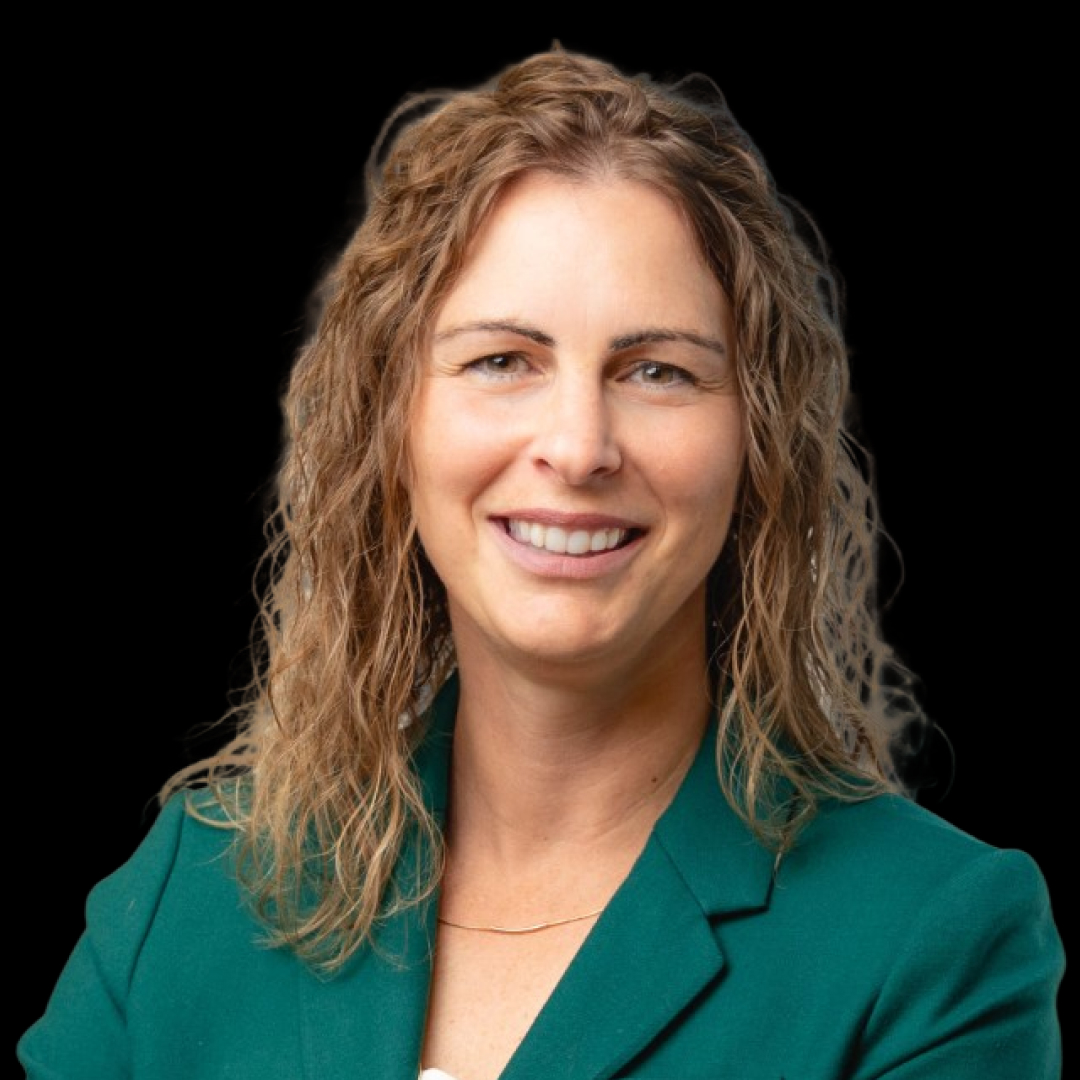
In this episode, we sit down with Jillian Bichanich, a Wisconsin-born founder and builder, to discuss how she is growing two mission-driven startups at the same time. Jillian shares her journey as the co-founder of Cubbi, an app designed to support families navigating disabilities, and as the founder of Pocketchange, a platform dedicated to helping consumers shop based on their values.
Jillian explains why following what feels alive has guided her entrepreneurial path and how facing rejection and chaos shaped her drive. We explore the unique partnership she shares with her co-founder and her experience of bootstrapping both companies. Jillian also reflects on the importance of aligning business with personal values, and her vision for revolutionizing industries with purpose-driven ventures.
Key Learnings
Follow What Feels Alive, Not a Rigid Schedule
Jillian doesn't time block Cubbi in the mornings and Pocketchange in the afternoons. That's not how she operates. She follows what feels alive. Some days she works 24 hours straight on one company. Other days she's deep in the other. The key is paying attention to where the energy is flowing and not forcing a fifty-fifty balance that doesn't actually exist in real life. She's learned that when she forces things, whether the timing isn't right or the people aren't right, it never works and she spins out wasting energy.
Running Two Startups Can Actually Make Both Stronger
Building two companies at once sounds like a recipe for burnout. But Jillian's experience has been the opposite. Learnings from one company have helped her avoid problems in the other. Connections she's made through Cubbi have supported Pocketchange, and vice versa. Design teams, development partners, and mission-aligned supporters show up for one and end up helping with both. When your startups share a common thread of helping underrepresented people get seen and supported, they start to feel less like separate businesses and more like one ecosystem.
When Traditional Fundraising Fails, Get Scrappy
Jillian and her co-founder Christine spent a year grinding through pitch competitions and investor meetings for Cubbi. They had the data, the mission, the team, the feedback. And still, the doors didn't open. So they stopped waiting for permission. They found someone willing to give them $13,000 and built the MVP themselves. They pushed it out to parents. They got picked up by mom influencers. They grew organically. Looking back, Jillian says she's glad they didn't get that big check. The scrappy path forced them to figure things out in ways that made the company stronger.
A Co-Founder Relationship Without Ego Changes Everything
Jillian and Christine have gone through the depths of hell together building Cubbi. They've disagreed. But they've never fought. Their skill sets are completely different, which helps. Christine brings deep expertise in special education advocacy. Jillian handles tech, finance, and marketing. But beyond the division of labor, what makes it work is the absence of ego. When Jillian told Christine she was starting Pocketchange, Christine didn't feel threatened. She asked how she could help. That kind of partnership is rare, and Jillian knows it.
Sponsor-Based Revenue Can Unlock Your Mission
Cubbi started as a paid app because that was the only way to keep the lights on while bootstrapping. But Jillian always wanted it to be free. Last December, she and Christine had a moment of clarity. They decided to put all their eggs in one basket and pursue corporate sponsors who genuinely cared about the mission. It worked. A brand called Aerofoliology came on as their first major partner, and the entire model shifted. Now Cubbi is free for families, funded by sponsors who want to make a difference. That first domino falling changed everything.
Entrepreneurship Is a Mirror of Your Human Essence
This one stuck with me. Jillian doesn't see business and personal life as two separate things you're trying to balance. She sees your business as an amplification of who you already are as a person. If you're a good person who shows up every day, pays attention to your customers, and cares about your mission, you're going to do well. Or at the very least, you're going to learn what you need for the next thing. Your company reflects your character. That's the lens she operates from.
The Wind Tunnel of Chaos Is Real, and You Need Someone to Hold Onto
Jillian described a moment in her Cubbi journey where she started to feel small. A million nos. Getting ghosted by investors. Wondering if she was crazy for believing in something no one else seemed to see. She called it a wind tunnel of chaos. Thankfully, she had Christine to hold onto. They kept each other grounded when everything felt wobbly. For solo founders, this is a reminder to find your people. You need someone who believes in the mission when you're starting to doubt it yourself.
Madison's Startup Scene Feels Different Because It Is
Jillian has worked in Silicon Valley. She's lived between Vegas and Redwood City. And she chose to come back to Wisconsin. Why? The values, the kindness, the approachability. In Madison, almost anyone will take your call. If something isn't a good fit, people introduce you to five others who might be. Jillian says the tech and entrepreneurship landscape in other places has become closed gate. Madison still has that open door energy. It's not about Harvard degrees or being the seventh employee at Meta. It's about showing up, being resourceful, and helping each other out.
Wisconsin Needs More Storytelling
Jillian made this point clearly: there are incredible founders across Madison, Milwaukee, and the entire state who are doing amazing things. But not enough people know their stories. Everyone has the polished Instagram feed, but nobody talks about the hard stuff until they've already made it. Jillian wants to see more real-time storytelling. The kind where someone says, "Yesterday was one of the crappiest days I've had in business, but I showed up today and things turned around." That kind of honesty helps other founders keep going. It's why she's grateful for platforms like this podcast.
Transcript
Jillian Bichanich [00:00:00]:
It shouldn't be this hard to do good in this world. It should not be this hard to figure out how to do good. So we need to just put all of our eggs in one basket that we think makes the most sense here and give it everything we have and either go down swinging or come out and be much more successful than we have been.
Jacob Miller [00:00:19]:
Hey everyone, and welcome back to the Startup Wisconsin Podcast, a show where you can learn about Wisconsin's growing tech scene through stories of startups, founders, investors, and the talented people making it all happen. Today I'm talking with Jillian Bichanich, a Wisconsin born founder and builder who's building and growing two startups at the same time. Jillian is the co-founder of Cubbi, a free app supporting families navigating disabilities with tools for managing the overwhelming paperwork, appointments, and care. Jillian is also the founder of Pocketchange, a new and upcoming platform she calls the Anti-Amazon that helps consumers shop based on their values while giving visibility to local, underrepresented and purpose-driven businesses. This conversation covers the reality of bootstrapping, why following what feels alive has been her guiding principle and the human side of entrepreneurship. Jillian gets honest about facing rejection, the wind tunnel of chaos that almost broke her and why she believes entrepreneurship is just a mirror of your human essence.
Jacob Miller [00:01:25]:
All right, folks, let's get into it. You've built one, not one, but two mission-driven startups. You have Cubbi and you have Pocketchange, but I kind of want to start with Cubbi chronologically. I think that makes the most sense. So do you want to tell me or tell us about what is Cubbi and how you've grown it as a startup?
Jillian Bichanich [00:01:45]:
Yeah, absolutely. So Cubbi is probably the biggest labor of love of my entire life. It is an app for parents and families who are navigating the world of special education, navigating the world of disabilities. And so what it does is it helps parents and caretakers really come in and document anything and everything that matters to them. It might be IEPs from school reports or evaluations. It might be medical reports. They can bring everything into one place, they can share it with their family team, track appointments, track tasks, even track the mood of their children to check for everything from eating disorders to depression, to anxiety, to medications. And yeah, it's a really beautiful way for families to be able to track right now, which is usually in a lot of disparate places.
Jacob Miller [00:02:34]:
Yeah. What does that look like before Cubbi? I guess what were people doing? As an example, I'm sure there's a lot of different situations, but maybe an example of something that people have found like, wow, we used to do it this way and this is so much better.
Jillian Bichanich [00:02:46]:
Yeah. It's boxes and boxes of bins. I have no idea how. I don't know how in 2025 it still is bins of paperwork, but that is what parents are navigating right now. So typically what happens in the education systems is they are still manually printing off different reports, different plans, different evaluations and handing it to the parents. And then those parents are expected to understand the lingo, understand what's happening in the reports. And for children who are in the special education system specifically, they are then having continual meetings about that documentation. So parents are bringing in truthfully binders and bins. Maybe some have tried to scan and upload it somewhere else, but it's a really difficult thing to manage if you're not doing it in something that was built for the needs of these types of appointments.
Jacob Miller [00:03:34]:
Okay. Okay. What have been some of the big, I guess, jumps or progress or growth with Cubbi? Because obviously there was the beginning stages of it, but where have you seen the bigger changes in growth happen?
Jillian Bichanich [00:03:49]:
Yeah. So this is probably ... I was going to say it's an interesting story, but I feel like this is actually so common with founders. So the way that Cubbi initially began was with a co-founder of mine, her name is Christine. She's the one who's really lived this experience with her daughter. She explains it beautifully. She walked in one day and pretty much walked out and her daughter had eight diagnoses and she explains it like she was dropped in the middle of a foreign country. She had no friends, didn't know the currency, didn't know the language, had no support, no community, nowhere to go. And she was like, "There has to be a different and better way." So when we initially started, and there's kind of more to that I can come to, but the whole point of your question, where we started was we were like, "We're going to go talk to some investors.
Jillian Bichanich [00:04:31]:
We're going to raise capital for this. We're going to blow this out of the water." It's one in five children right now have some form of neurodivergence or potentially a physical disability or a different disability that they're working through. So this affects a mass amount of people in the United States. We were like, "Something has to exist." Found out it didn't exist, so we decided we were going to go build it. And we had this vision, mainly based on how fundraising had been for me at every other company I'd ever been at, had this vision that we were going to just walk into some companies and come out. We were going to have a couple million in capital, go ahead, build this right, do all the things. And so for probably a good year of our life, we did the grind. We were in different pitch competitions.
Jillian Bichanich [00:05:17]:
We had tried to knock down every door. And it was incredibly surprising to me how much we were able to project in revenue, in our purpose, our mission, in the team and the tech platform and the feedback we had already gotten, the research we had done, we didn't ever break down that door. And so Christine and I were like, "We have to do this just a completely different way. We have to go figure this out. We're not going to leave our mission up to the hands of people that aren't here with us." And so we did something completely different. We ended up getting $13,000 from someone, begging them and built the platform, like the MVP pushed it out to parents. That was the first big milestone. We then ended up getting picked up by some mom influencers. That was the second big milestone for us.
Jillian Bichanich [00:06:06]:
We had waves of parents talking about how important this was. We got picked up out in the UK because this is absolutely like a global problem. And then most recently, about a month ago, we were able to make Cubbi free. So when we initially created it, it was a paid app. It was the only way we could keep the lights on in bootstrapping the company. But about a month ago, we were able to make it free because of sponsors, corporate sponsors and missions and brands who really want to stand behind what we're building. And so for me, those are the top three in the evolution of that company that have really meant something to me.
Jacob Miller [00:06:42]:
Yeah. Was there a specific point where you kind of realized, oh, maybe the revenue model should be sponsor-based versus just asking users to pay for it? How did that conversation happen, I guess?
Jillian Bichanich [00:06:54]:
Yeah. When we started, we were like, "You get a revenue model, you get a few models." We were going to work with schools. We were going to work with parents themselves. We have providers that also come into our directory that parents can access. So we had providers that we were thinking were going to come in and then sponsors. And it was really hard for us as two women, like moms also trying to live our lives to try to figure out and perfect all of those revenue streams. It just didn't work. Someone would call us this day and it'd be all hands on deck. And then we'd have a huge partnership meeting with a potential someone else and then an investor would creep back in. I feel like we were ping pong all over the place trying to just figure out what could stick because we knew if we could just get a certain amount of capital, it was game over.
Jillian Bichanich [00:07:45]:
We were like, at that point, we know exactly what we need to spend. We knew who we needed to hire, who we didn't need to hire. But for us, I think it was more actually around this last holiday season. So this last holiday season, it was about December. It was frigid cold. Christine had visited. She lives in Connecticut. She's actually moving here just next week.
Jacob Miller [00:08:06]:
Oh, nice.
Jillian Bichanich [00:08:07]:
And we were both just in this space of it shouldn't be this hard to do good in this world. It should not be this hard to figure out how to do good. So we need to just put all of our eggs in one basket that we think makes the most sense here and give it, again, everything we have and either go down swinging or come out and be much more successful than we have been. And so we started talking to some of the early providers that had believed in us and come into our directory, started opening ourselves up to more of these corporate sponsors and brands, and we found just a few incredible brands. There's brands out there who do a lot for nice publicity. And then there's people who you start meeting their VP and executive team and they truly care about taking their wealth and their financial resources and making the world a better place.
Jillian Bichanich [00:08:57]:
And we were very lucky, grateful, resourceful, all of the above blessed, I don't know, to land and find some people that we were really able to work with. So Aerofoliology ended up being our first big partner that came on. And once that happened, our entire model got to shift. That's where we got to make the app free, like I said, which is something we always wanted. And I feel like it's kind of that analogy where people say it takes that one first domino to fall and everything else starts to land. And as a founder, when those dominoes haven't moved yet and you're staring at them and you feel like everything's kind of wobbly, it's a weird place to be in, but I mean, we kept going and I'm really grateful that we did. Yeah.
Jacob Miller [00:09:38]:
Yeah, that's great. So I actually want to go back. Is Cubbi your first startup as a founder, like a co-founder should say?
Jillian Bichanich [00:09:46]:
Yes. As a founder founder, yes. I had often been the right hand to other founders, but for me to personally go all in, Cubbi was the first, yes.
Jacob Miller [00:09:54]:
Yeah. I want to talk about that. How did you get connected with your co-founder? How did that relationship happen? And then was there a moment where you're like, "I'm going to take the jump in the leap and make this happen?"
Jillian Bichanich [00:10:06]:
Yeah, divine intervention probably. So no, the last nine to five that I had was a custom tech company, and we built a lot of different applications. And then we also did a lot of security analysis and consulting for early stage companies. And Christine had actually come to the company with this concept, this idea, and it was not something that the founder and CEO of the company that I was with really believed in. He didn't necessarily see how it would work, how it would function, if it would really take off. And so me, again, as kind of like a woman and mom, all I could see was Christine's fire. That for me, I am all about people's inner soul and what they work for and what they intend. And I believe that good people who show up every day and keep trying to do better and create big things, I believe eventually it's going to click and it's going to work.
Jillian Bichanich [00:11:02]:
So I had asked my CEO at the time, "Hey, do you mind if I just help her on this side?" I was helping her with a pitch deck, minor things, it'll be on my time, I'll figure this out, and I just want to help her. I want to help her see this through. And so from there, I did. I helped her with a variety of things. She had named me VP of partnerships at one point when we were starting to talk. And then we had hit a point probably six to eight months in and she was just like, "At this point, we are co-founders. We have done this whole thing together. You've been here since the beginning, maybe in a different way than I expected, what can we go do? " And so yeah, I think that's kind of the point where I was like, okay, for me, entrepreneurship, it fell into my lap a little bit.
Jillian Bichanich [00:11:44]:
And maybe I'm not giving myself enough credit because at one end, if you look at my entire history, my professional history, I've led every department you can think of inside of a company. So I had a very well-rounded understanding of business and of companies and early stage startup companies and employee number one, all of those things. And I think that this was just a divine way where I was led to be able to say, "You're meant to do bigger things and we're going to give you a silver platter. And it's up to you now if you're going to take it and run with it. " And
Jacob Miller [00:12:16]:
We did. Yeah. That's awesome. I love that. How do you guys share responsibilities today? What does that look like compared to in the beginning?
Jillian Bichanich [00:12:23]:
Yeah, I know there's so many kind of terrifying co-founder stories, and people probably all say it when they're in the happy land, but we've gone through the depths of hell over these last few years, and I have quite literally never had a better working partnership. So Christine has this really unique skillset where she's been in the special education realm. She's navigated that space for years. She actually has helped numerous families at this point win over about $15 million in outplacement and support for their children. She has fought the fight for families who are really working through a difficult system. I, on the other hand, am the tech, the finance, the marketing, the business side of things. So we've never, not once, we've never not once fought. We have definitely disagreed about how to move forward in something, but it's been such a respectful relationship. She's quite literally my best friend.
Jillian Bichanich [00:13:20]:
I mean, she's moving a half mile down the road from me. So we have been really lucky, I think, to have really different backgrounds and kind of found a really unique way to say, "Hey, typically founders are like, you need your tech person and your finance person or your people person and your backend person." But for us, we had very different skillsets than are traditionally, I think, used in a co-founder relationship, and it just worked and it still works. I'm so, so grateful that my first experience was, it was like everything else can be feeling like a dumpster fire at times, but me and her were really tight in the whole experience.
Jacob Miller [00:13:59]:
Yeah. I mean, obviously I've heard horror stories myself as well, and it's a little bit of one, being the right kind of person for her too. Hey, have a sense of empathy and understanding and also knowing yourself as a person and your flaws and forgiveness and all that kind of stuff, all those things kind of go into play. And if you both have that, it just makes it a lot easier. But also divide and conquering which you said, "Hey, these are your strengths. This is where you should play. These are my strengths. Here's where I'm going to play. This totally makes sense and it's going to work." So that's awesome.
Jillian Bichanich [00:14:33]:
I love that you say that because I feel like I've always felt like entrepreneurship in this way is just a mirror of your human essence. We talk about business and we talk about personal, and then everyone and their brothers talks about work-life balance. And it always feels like you have these two sides that you're trying to figure out, but I've never seen it that way. I don't feel like that's how it is. I feel like we are our human selves and our businesses are this amplification of who we already are as people. So you saying that, actually, that hits very deeply with me because I feel like kind of to the beginning of what I said, you're a good person. Your businesses in general, you have a good concept, you pay attention to your customers, you pay attention to your mission. I believe generally speaking, again, you're going to do well or you're going to learn whatever it was you're intended to learn or you're going to get all the tools needed for the next big thing that you do.
Jillian Bichanich [00:15:30]:
But yeah, I like that a lot.
Jacob Miller [00:15:32]:
Oh, great. Yeah. Yeah. I don't know. I'm just sharing what I'm thinking through and I'm glad it resonated with you
Jillian Bichanich [00:15:38]:
For sure. Yeah, absolutely.
Jacob Miller [00:15:40]:
It's funny because now I'm thinking through a question I wanted to ask was around, before we get into Pocketchange, I wanted to talk about your mindset around running two companies at the same time. How do you stay grounded and focused? How do you maintain energy levels, all that kind of stuff? We kind of talked about it on our first call together. I'm just curious how you think about that.
Jillian Bichanich [00:16:03]:
So I'll be so honest, I didn't realize no one does this. I feel like not many people are trying to start and run two companies at the same time. And I'm kind of glad that I didn't, I don't know, explore that, discover that, look at stats of that. Because for me, the way that I feel really grounded, the way that I keep everything on straight and I can move in all the ways is I'm kind of notorious for saying that I follow what feels alive. And so I know from an outside perspective, there's all of these things that you could start to say. Well, okay, what does that mean? So if one is starting to take and be more successful, you put all your energy there and the other just sits or you're bored with one, so you take up the other. That's not what I mean.
Jillian Bichanich [00:16:48]:
It's more like, as you can probably see from my last example of this weird people trying to navigate a fifty fifty balance, I don't believe that's ever how anything is. I don't believe that's how we are in workouts, we are in relationships, we are in our finances. For me, life is this big wavy WTF moment of spiral and sometimes it's really high. Other times you have no idea what's going on. Sometimes you're hitting a low. But for me, I think I spent a lot of my life being a Class A perfectionist, a Class A people pleaser. I was like valedictorian of my high school. I got five college degrees. I did everything that I thought I was supposed to do. And when I would force things or try to bring things in where the timing wasn't right or the people weren't right or I wasn't in the right space of my life, it never worked and I would spin out wasting a lot of energy.
Jillian Bichanich [00:17:46]:
And so for me, I know some people live on time blocking and making sure and they might say, okay, Cubbi gets my mornings, Pocketchange gets my afternoons, but that's not the reality of it. I mean, I might go 24 hours working almost nonstop on Cubbi and then spend the next two business days working on Pocketchange because of when things are scheduled and how things are flowing or when things get a little bit of a pause. It hasn't been difficult for me. I think instead it has completely lit me up. I've had learnings in both spaces that have helped the other company tremendously, like help us not have problems or little blocks that we would've had to break through because I already learned and figured it out within the other, regardless of which came first. I've made so many cool connections in one of them that has helped in the other, like design teams, development teams, incredible support people who have been called to one mission, but have helped us with another.
Jillian Bichanich [00:18:46]:
So for me, it's like this, I don't know, it's just like this cool universe of incredible people all trying to do good and that might look different on each day. But when you look at the missions of both, it's really about trying to help people be visible, help people get support, help people be seen with power, with money, with resources that don't typically get that and doing something about it. So I don't feel like it's the same as me being like, "I have an in-person ice cream shop and an online e-commerce swimsuit brand." They feel so together for me.
Jacob Miller [00:19:24]:
Sure. Yeah, yeah. When you decided to commit to building or going after and start Pocketchange, was there a conversation that you had with your co-founder where you're like, "Hey, I'm really serious about launching this other thing. I just want you to know." I guess how did you have that conversation or she always knew it was going to happen at some point? I'm just curious how you're balancing commitments to Cubbi and then just her knowing that, "Hey, you're going to be doing this thing too." I'm kind of curious. Yeah.
Jillian Bichanich [00:19:57]:
No, that's a good question. So I was definitely nervous for that conversation, but the reason that I was the most nervous is because Christine and Cubbi mean truthfully so much to me. If anyone in my life, they know me, this matters significantly to me and I never wanted it to feel that I was up and leaving or that there was some hidden agenda or plan. Once one hits a certain spot, I'm going to go all in on that. The really cool thing about Christine is her and I have often joked that we're really good at birthing companies. We have ideas, we see patterns, we see things that should exist before they exist. And so when I came to her with Pocketchange and I was a little nervous and I was trying to talk to her like, "Hey, from the depth of my soul, I'm telling you straight up, I can do both of these things." She was not only so supportive, she was like, "Okay, how do I help sell this?
Jillian Bichanich [00:20:51]:
How do I help get ... Do you need me to go? " She's got a green thumb with press. She's like, "Do you want me to go get some press? How can we amplify what you're doing here?" She could not be more excited about this launch. When she comes in, her daughter's helping watch my kids for all this other press that I have.
Jillian Bichanich [00:21:09]:
The egos aren't here. The egos are not in the building. You know what I mean? It's like we're here and I don't think there is any piece of her own heart that would be able to see what I'm building in Pocketchange and say like, "Oh no, please don't. Please don't go do this. Please don't go put your time here because both of them are really worthy causes."
Jacob Miller [00:21:28]:
Today's episode is brought to you by Headway, a digital product agency based in Wisconsin. Do you need to design and build a world-class user experience for your software, but feeling like you just can't get there on your own? That's where Headway comes in. We're the folks who help ambitious startups and enterprise teams bring their product ideas to life through design, development, and product strategy. We don't just give you user interface designs and leave you to figure out the rest. We work with you and your target customers to create beautiful user experiences, build scalable design systems, and provide Silicon Valley level talent to get it done right the first time. Whether you're launching a new software or just looking to add features, we've got your back. We've worked with startups and industries like logistics, healthcare, FinTech, and EdTech, helping them solve their biggest software challenges. And here's the thing, no matter how complex your product is, we can help you gain clarity and get the job done together.
Jacob Miller [00:22:29]:
We're so confident that we'll be the right fit that we offer a 50% money back guarantee. If you don't think we're working out within the first 45 days, ready to see how we can help you and your team, just head over to headway.io and book a free consultation today.
Jacob Miller [00:22:46]:
So tell me about Pocketchange. What is it? What does it do? Who's it going to help? What does it look like?
Jillian Bichanich [00:22:52]:
So Pocketchange at its core is a values-based shopping app. The whole point of it is for users, consumers to be able to go download the app and really easily find anything that they're looking for. This could be a pancake cafe down the block. It could be a business marketing agency. It could be a new pair of jeans and be able to search for companies that match their values and alignments. So that could be something like Black-owned, LGBTQ+, it could be veteran-owned, made in the USA, companies that give back to children or the earth or are union-based, or maybe they employ previously incarcerated humans, maybe whatever. There's 40 categories that allow people to really say, "Hey, I'm going to acknowledge that money is power." I think a lot of people don't like when I say that and it's true. Money is power. It can get you in spaces, it can get you resources.
Jillian Bichanich [00:23:51]:
And so therefore, I'm going to take my dollars and I'm going to put it towards companies that back the beliefs, the values, the missions that I believe in. Market Change is not here to tell anyone what to believe in. It's here to say, "We care that you have morals, that you have an opinion, that you have values, and we're going to help you spend it. " I have a unique kind of history out in Silicon Valley where I learned a lot about the world's largest social media platforms. I'm talking 17 of the world's largest platforms, Russian, like China, American, whatever. And I learned a lot about the algorithms. I learned a lot about visibility and what's seen, what's not seen, who gets pushed, who doesn't. And it's very, very hard for value-based companies, for underrepresented founders, for small businesses to be really seen anywhere. We have people who are spending a quarter of their week trying to make viral social media content and not getting anywhere.
Jillian Bichanich [00:24:52]:
And it's because the systems truthfully aren't built for them. So Pocketchange helps the consumer, but just as much, if not more, it helps all of these very specific businesses actually be found in a world that doesn't make it easy yet. Launching soon, but yet. Yeah.
Jacob Miller [00:25:10]:
Yeah. What is the launch date so far that you've planned, I guess?
Jillian Bichanich [00:25:14]:
Yeah, the first day of August.
Jacob Miller [00:25:16]:
All right. All right. Very cool.
Jillian Bichanich [00:25:17]:
Right around the corner. Awesome. It's been in the making for about a year. I bootstrapped the whole thing, was trying to pour any little dollar I could scrape up everywhere to make it a reality. And yeah, now that we're so close, it's kind of surreal. It's really cool. I'm excited.
Jacob Miller [00:25:34]:
Yeah. How did you approach the bootstrapping aspect of it? Did you hire a developer? I'm kind of curious or did you do some stuff like vibe coding things together? I'm kind of curious how you approached building the MVP.
Jillian Bichanich [00:25:47]:
If you would've talked to me three months ago, I would've vibe coded my life away. Last May, it wasn't as easy to do that. And I am a little bit of a ... It's either to my downfall or maybe it's a brilliant piece of me, but especially with tech, I am not the one that loves to throw out the crappy MVP that doesn't look super great. For me, I think that the consumer experience, I just really believe in a good flow and a good understanding and put this button here for a reason and don't put it here for a reason. So I actually started a little bit backwards. I started with the branding. I had this concept for Pocketchange. I got legal, all of my legal team. We literally waited until midnight 01:00 to go grab the trademark for Pocketchange because someone else's was ending.
Jillian Bichanich [00:26:39]:
It was ... I feel like mine has just kept me where I need to go. And then I started with the design team that eventually moved into creating the entire Figma. It was a nine-month process where we really went deep in certain feature sets. There's things I haven't brought up, but spending challenges where we can do local spending challenges and say, "Hey, Madison area, let's all try to spend 10% of our purchases with local business or women-owned business or whatever it might be. " So there's a lot of really cool things in the app that are going to help people not only find who they're looking for, but really enjoy it, start to understand that if we all band together, 5% of the United States spending right now is $400 billion. If we took five of our $100 and put it towards something we cared about, Pocketchange would help move $400 billion a year to values-based mission-led companies. So yeah, we went through this whole experience with it, but I got to the point where my checking account would be at $2 and then I could be like, "What do I do now?" I have this beautiful thing, I have to develop it. And out of nowhere, something would come in and the money would be there and I would keep going. And so like I said, back to the flow, I'm just very trusting that things land when they're supposed to.
Jacob Miller [00:28:03]:
Yeah, yeah. That's awesome. I'm actually curious around your experience being a founder in Madison and in Wisconsin in general. I guess what do you love about building something in Madison and is it a special feeling for you or I'm just kind of curious what you've had experiences with.
Jillian Bichanich [00:28:21]:
I love Madison with my whole heart. I moved out to the Twin Cities for a while, and then when I was working out in Silicon Valley, I was practically living between Vegas and Redwood City. And so I was going back and forth in all these places. And when I was pregnant with my first daughter, I just knew I needed to come back to Wisconsin. There's something about Wisconsin and the values here and the people and the kindness that brought me back. And I am so glad that I'm here, especially as I'm navigating these two companies because for me, I think there's just something different. I think a lot of the landscape of tech and of entrepreneurship, it's really become closed gate. That's what I feel. I feel like it's really hard now. There's a lot of gatekeepers. There's a lot of doors that are closed.
Jillian Bichanich [00:29:09]:
I think things have really shifted from even 10 years ago when I was in this space. I feel like people were a lot more maybe approachable. And in other areas of the world, I now agree with this, where it feels kind of locked, but I think Madison has this really unique energy about it where almost anyone will take your call. Anyone will hear you out and if something isn't a good fit, they're the first to introduce you to five other people. And I'm so grateful for that. I've been talking with some of the chambers here, some of the other organizations that are more nonprofits, but that help small businesses or targeted founders. And it's just been so cool when you get on a call similar to how you and I were, where you're like, "Oh, you're a good person. You're cool. I could go hang out and we'd be cool." And I feel like that It's just the vibe here and I really appreciate that.
Jacob Miller [00:30:03]:
Yeah, that's great. Have you ever been a part of any of the local meetups or Starting Block has events and stuff like that there? Are you a part of the ecosystem in that format at all?
Jillian Bichanich [00:30:14]:
So I haven't gone to Starting Block specifically in those events, but I have been to some of the tech happy hours that have happened and some of the founder weekends and weeks where people go through. And I think that they're so cool. I think it's incredible how many brilliant, driven, resourceful humans we have here. I feel like it's unrivaled. You can say what you want about New York City or Austin or, like I said, Silicon Valley, but there's something different here. I feel like we're really holistic in our approach to business, if that makes sense. It's like maybe we all don't have Harvard law degrees or worked at Meta as its seventh employee, but we've had such an intricate web of, I don't know, ups and downs and different roles and wearing all of these hats. And I think when you put us all in that jumbled up bingo machine and you start throwing the balls out, we just have a different approach to life that I am very fortunate to be in and fortunate to know.
Jacob Miller [00:31:21]:
Yeah. Yeah. Is there anything if you had a magic wand and like, oh, I wish Madison had more of this, or I wish that this doesn't exist, I wish it did exist. Is there anything like that where you feel like, especially in your position as a founder or a serial entrepreneur, anything around that at all? I guess I'm curious.
Jillian Bichanich [00:31:39]:
So I think if you would've asked me at the beginning of my whole journey, I think more risk-willing investors would've been awesome at the time. But it's interesting because hindsight's 20/20. And when I look back, I'm so glad we didn't get that check. I'm so glad it wasn't that easy. I'm so glad we had to fight for things and figure them out in a different way. I know I mentioned to you outside of this podcast that I really love what you all are doing because I think that there's this need for connection in a real way. I think it's easy sometimes for people to say, "Hey, go get drinks at this event or go throw yourself on this list." But there's a difference when people really take care and take meaning into how they can truly support each other, connect each other, take a personal place in being a part of the story.
Jillian Bichanich [00:32:32]:
And maybe the last thing I would say as part of that is just more storytelling. I think that there's incredible people in not only Madison, but Milwaukee and the entire state. And sometimes I meet people who are doing just incredible things. I have companies and businesses that are coming into Pocketchange and I hear what they've built and who they are and what they've overcame in their life. And I'm just like, the whole world needs to know who you are. I don't know if we have enough storytelling. And that's why I'm really grateful for things like this where we can all share the stories because on the outside, we all have aesthetic Instagram feeds and whatever else, and it feels like everything's so perfect. And then you have people that talk about their adversity, but usually they only talk about it once they've hit the big at the end.
Jillian Bichanich [00:33:18]:
And I think there's something so real about being able to say, "Yesterday was one of the crappiest days I've had in business, but showed up today and everything is turned, but keep going and trust yourself because it's just not a linear path."
Jacob Miller [00:33:33]:
Yeah. What do you feel like was a struggle for you when you were working on Cubbi, the beginning stages of that and just around some of the conversations with that, whether it was like, "Hey, should we raise more funding? Should we try to just figure out more revenue?" Do you wish there would've been a local resource for that or maybe like, "Oh, now that I know that it exists, I wish I would've known about it before." Was there anything like that for you?
Jillian Bichanich [00:33:57]:
Yeah. I mean, for me, I think I had this moment where I started to feel a little small. You get a million nos and then you start to say to yourself, is this ... I don't know if I can swear, am I batching crazy? Or do we just have this vision that no one actually cares about? Even though people keep telling us, we've done all these surveys, all of this data mining, but are we nuts? Are we that crazy that we think this thing can go not only where it can go, but I think it was always really heart-led for us. It was so important for us to help people. And you start to get in this wind tunnel where for me, thankfully I had a co-founder in this space, but it's like I felt like we were both just holding onto each other in this wind tunnel of chaos, hearing no, hearing no, you don't have this, there's not that.
Jillian Bichanich [00:34:49]:
Where's this? Can't invest here. Or more often than not, we would just get ghosted. It wasn't actually nos. And even to this day, those people still creep on our profiles. We're like, "Yeah, we told you, we told you this was going to go somewhere." Not out of spite or ego, but out of a way to say, "I wish you would just bet on people who maybe don't look like your typical bet." Because there's a lot to be said for people who have something to prove and for people who really care with their heart and soul about what they're doing. And yeah, I would love. If there was a space that was like, "Hey, every Friday at 4:00, people come pitch what they're doing and they get feedback or they understand what you're going to have to navigate that you don't really know. And we're all here to just help each other.
Jillian Bichanich [00:35:34]:
Some days you give a little others, you take a little ... Or I'm sorry. Yeah, given to ... Yeah. Yeah. I feel like that would be incredible. Yeah, I think that would be an incredible place because otherwise you're living on a hope and a dream and your sanity and assuming you know what you're talking about and crossing your fingers and being like, all right, we'll see where we're at in a year.
Jacob Miller [00:35:54]:
Yeah. I would encourage you actually to go to Starting Block because they actually on Wednesdays they have ... Have you ever heard of One Million Cups?
Jillian Bichanich [00:36:00]:
No.
Jacob Miller [00:36:01]:
So they're a national meetup and there's different chapters in different cities. And there's one in Madison and they hosted at Starting Block on Wednesdays in the morning, and it's exactly what you're sharing.
Jillian Bichanich [00:36:11]:
That's so cool.
Jacob Miller [00:36:12]:
It's a dedicated time for people to share their story. Here's my startup story or here's my idea. And it's the opportunity for the give and the take, just like you said. I would encourage you to actually go and say, "Hey, I would love to talk about my experience with Cubbi or maybe Pocketchange is a separate opportunity to speak. Obviously they kind of want other folks to have the opportunity to speak. But I think it'd be great because one, there's probably a lot more people more like yourself, whether they're women or first-time founders where it's like, I'm trying to find someone that's like me that's done this before and who can I talk to? And you could be a great example of that for people. No,
Jillian Bichanich [00:36:49]:
I would love to do that. Thank you for sharing that. Wednesday mornings.
Jacob Miller [00:36:50]:
Yeah, just go to the Starting Block website and you'll find Women in Cups under their ... I don't remember if it's the events tab or resources or something. It's one of those tabs, but you'll find their events and stuff. Or I think it's a community tab maybe.
Jillian Bichanich [00:37:04]:
Okay.
Jacob Miller [00:37:04]:
But yeah, definitely check that out. I encourage you to do that. But yeah, I think that's great. It's just funny. You were explaining and I was like, I'm pretty sure that already exists, but the problem is- We
Jillian Bichanich [00:37:13]:
Don't know about it.
Jacob Miller [00:37:14]:
Yeah, if you don't know about it, it's hard. But I would love to see you share your story and share your experiences with people there. And you never know. There might be something that you have a challenge with and someone might be able to help you out. So who knows the give and the take. So what's next? So you have Pocketchange, launching. Is there anything next for Cubbi? I'm kind of curious what the next six months looks like for you.
Jillian Bichanich [00:37:37]:
Yeah, so you're the first to hear it. Actually, we're super excited. So with Cubbi, I had mentioned that we brought in different providers. So when I say provider, what that means is that could be a speech pathologist, it could be a nanny, it could be an adaptive dance center or a sleep coach. It's really any person or service that can support these families. And when we had our directory and still have it, we would be asking people to come in and pay to be a part of that directory. And that was also funding the way that we were able to give it to all of our users. But we are really excited that we're actually going to introduce a pay what you want or pay what you can model for all of our providers. What we found is there are a lot of providers and nonprofits and different organizations and associations who are doing a lot for these families, but maybe don't have the funds or aren't actually taking in revenue.
Jillian Bichanich [00:38:35]:
And we want to make sure that they can get in our directory, be seen regardless of their revenue. And we've also found on the flip side of that, that there has been powerhouse brands and corporations and companies or even individual people who are really, really just bought into changing the landscape of Cubbi or changing the landscape of that world and want to be able to give more in different ways. So our entire model is changing and we're asking people, anyone and everyone that offers services, they can all be in and they can pay whatever they want and whatever they have and think the service is of value to them. And we're doing something a little bit different in the land. Wow,
Jacob Miller [00:39:17]:
That's awesome. Congrats on all the progress and all that stuff. That'll be amazing. Awesome.
Jillian Bichanich [00:39:22]:
Yeah. Thank you. I appreciate that. We have about a hundred businesses that have come in thus far. Again, I feel like they've kind of fallen into my lap. We haven't done any external outreach, but we're just so excited. We're excited to be able to say, Hey, at one point I was like, oh my gosh, I probably shouldn't say the anti-Amazon, but that is exactly what we are. We're this space that says it's really important to make sure companies can all play and that they don't have to give up 40% of their product to a large shark in the game that's not really doing what they should, in my opinion, for the businesses, for the founders. And we're going to flip things on its head and hopefully when I talk to you in a year about this one too, be in a good space. Yeah.
Jacob Miller [00:40:08]:
Yeah, that'd be great. We'll retrospectively look back at the launch and things like that and the progress, that'd be awesome.
Jillian Bichanich [00:40:15]:
Yeah.
Jacob Miller [00:40:16]:
Now I think we can wrap things up. I'm just kind of curious where listeners that are hearing your entire story here, how they can get connected with you. Is LinkedIn a good place to reach out or ...
Jillian Bichanich [00:40:28]:
Yeah, I love LinkedIn. My DMs are always open. If you are someone who heard any piece of this and you feel called in any way to either what we're building or maybe you are doing something that's really trying to make the world a better place, or you're just working on something cool, you want to say hi, I love DMs. I will respond to every single one of them. Please feel free to reach out. I'd love to know you.
Jacob Miller [00:40:50]:
Awesome. And then where can folks find out about Cubbi and then Pocketchange?
Jillian Bichanich [00:40:54]:
Probably also easiest just on my LinkedIn page and then CubbiApp, so CubbiApp.com. And then Pocketchange is pocketchangethe.world. And yeah, both of them are there and give you all the information that you need.
Jacob Miller [00:41:11]:
Wow. Wow, that's awesome. Those are actually pretty cool domains.That's awesome. Thanks for joining us on the Startup Wisconsin Podcast. Want to support the show? Don't forget to subscribe and get updates. If you're feeling generous, you can share, rate, and review our podcast to help others find us. All right, folks, until next time, let's keep moving Wisconsin forward.
Show full transcript
Subscribe
Get updates on future episodes, events, and more from our newsletter.
Listen On



Show Notes
(00:33) Meet Jillian Bichanich of Cubbi and Pocketchange
(01:40) Cubbi’s mission to support families
(06:42) How Cubbi transitioned to sponsor funding
(09:38) Jillian's path to founding Cubbi and Pocketchange
(12:16) Building a strong co-founder partnership
(15:42) How Jillian balances two startups
(19:24) Why ego-free collaboration is essential for success
(22:46) Building a values-driven shopping app
(25:37) From branding to MVP the hard way
(28:03) Why Madison is ideal for entrepreneurs
(37:28) Cubbi’s new "pay what you can" model
Show Notes
(00:33) Meet Jillian Bichanich of Cubbi and Pocketchange
(01:40) Cubbi’s mission to support families
(06:42) How Cubbi transitioned to sponsor funding
(09:38) Jillian's path to founding Cubbi and Pocketchange
(12:16) Building a strong co-founder partnership
(15:42) How Jillian balances two startups
(19:24) Why ego-free collaboration is essential for success
(22:46) Building a values-driven shopping app
(25:37) From branding to MVP the hard way
(28:03) Why Madison is ideal for entrepreneurs
(37:28) Cubbi’s new "pay what you can" model
Listen On
Listen to more episodes



Never miss an episode. Discover hard-to-find tech and founder events.
We dig up what's going on every month so you don't have to.
Get updates on exciting new podcast interviews, events, startup programs, accelerators, resources, and pitch contests happening in Wisconsin.
Choosing a city only tells us the region you live in.
It does not mean you only get updates for that city.
Have questions? Ask away.
hello@startupwi.org


