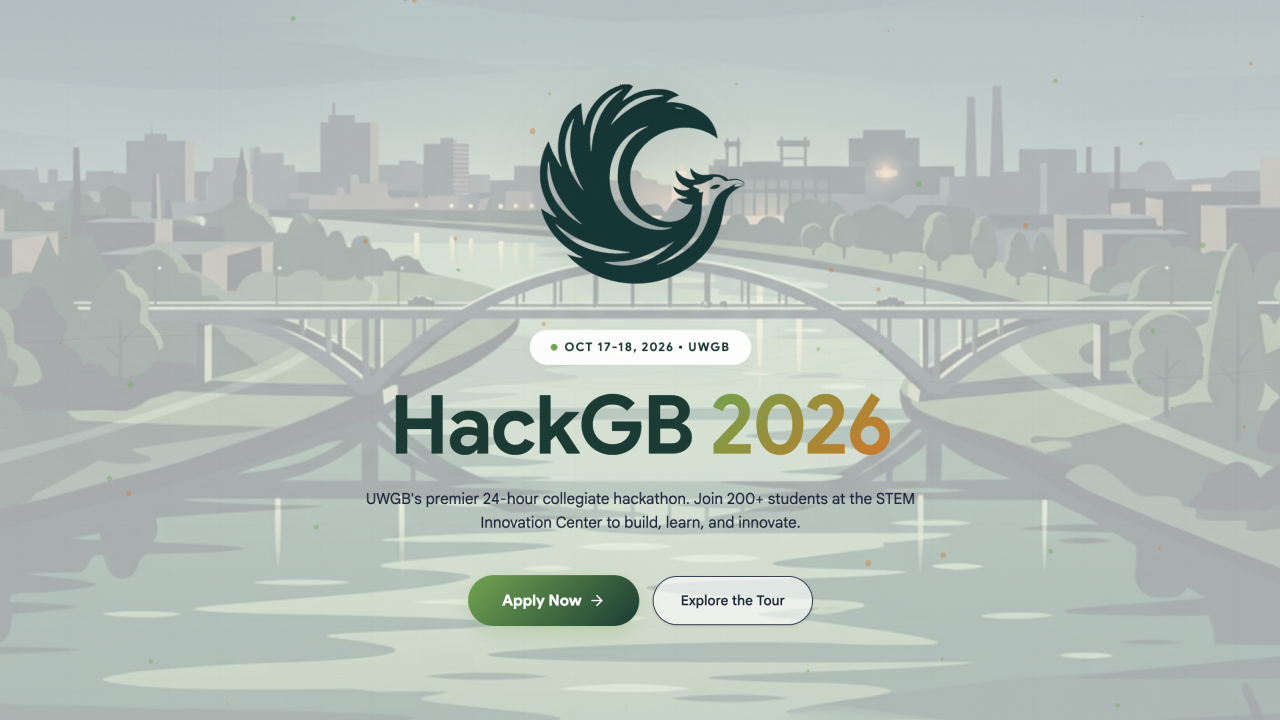

HackGB is 24 hours, four tracks, and a planned 200 students at the UW-Green Bay STEM Innovation Center on October 17 and 18. It's student-led, organized by the campus Google Developer Group chapter in partnership with Major League Hacking.
Two of its applications are open right now, and both get skipped by the people who should be filling them out.
The mentor application has no student requirement. The hacker application does, and plenty of students who qualify will pass because they've decided they aren't good enough at this yet.
What a mentor actually does here
Sit with teams and unblock them. That's the job.
Somebody's API call is failing at 2:00 AM. Somebody's team has three good ideas and no way to pick. Somebody has never scoped anything down to fit a deadline and is about to learn why that skill exists. None of that requires you to be the best engineer in the room. It requires you to have been stuck before and gotten unstuck.
If you've shipped software, run a product, worked a plant floor, or untangled a supply chain, you qualify. The organizers are also running workshops that teach from scratch and brainstorming sessions for teams that arrive without an idea, so there's a role for people who'd rather teach a room than debug with one team.
There's a judge application open as well, if a Sunday afternoon is more realistic for you than a full weekend. Judging and the project expo start at 1:00 PM on the second day.
Angela Damiani has been making the case for years that in this kind of work, presence beats persuasion. A weekend in a building with 200 students is about as literal as that gets.
Why the track list should interest employers
Instead of one open prompt, HackGB is running four.
Industrial is the one that maps onto this part of the state. It's aimed at supply chains, manufacturing, and workplace safety through automation and data, which is a fairly precise description of Northeast Wisconsin's economy. It's the same territory Lonni Kieffer covered on the show when we talked about automating the paper trail in manufacturing, where the hard part turned out to be change management rather than the technology.
A student who spends 24 hours building for a mill floor or a distribution center is learning a problem space that employers here will pay for. Several Wisconsin companies are already deep in it, including three AI deployments manufacturers should know about from the Wisconsin Tech Summit.
Mentoring a team in that track is the cheapest recruiting you will do this year.
The other application
For students, the FAQ answers most of the reasons people talk themselves out of it.
Eligibility is any undergraduate or graduate student over 18, plus recent grads within twelve months. It isn't limited to UWGB students. Travel stipends are available if you check in physically and submit a working project to the Devpost gallery by Sunday morning, though the amount isn't posted.
Casey Cammilleri built a cybersecurity company in this state and went from solo hacker to CEO to do it. Different kind of hacking, same starting condition. Everyone who builds things was once someone who hadn't.
The campus part
UW-Green Bay is not the school people name when they talk about Wisconsin's research-to-company pipeline. That conversation is usually about Madison and Milwaukee.
Jessica Silvaggi has spent years turning UW-Milwaukee research into startups, and her read is that the gap was never a shortage of good ideas. It was matchmaking. Jon Eckhardt is pushing at the same thing from the other side of the state with the Founder Forward vision for UW-Madison.
Both of those work on research and faculty. A hackathon works a layer earlier, on undergrads who haven't decided what they're going to be yet. A student who builds something in a weekend and gets a stranger to try it has run a compressed version of the whole thing, and nobody had to file any paperwork.
That gap between the work existing and people knowing it exists is the one Travis Erath kept hitting when he built a vetted job board for the Idea Fund of La Crosse. The objection he ran into wasn't money or ambition. It was that people don't know this work is here.
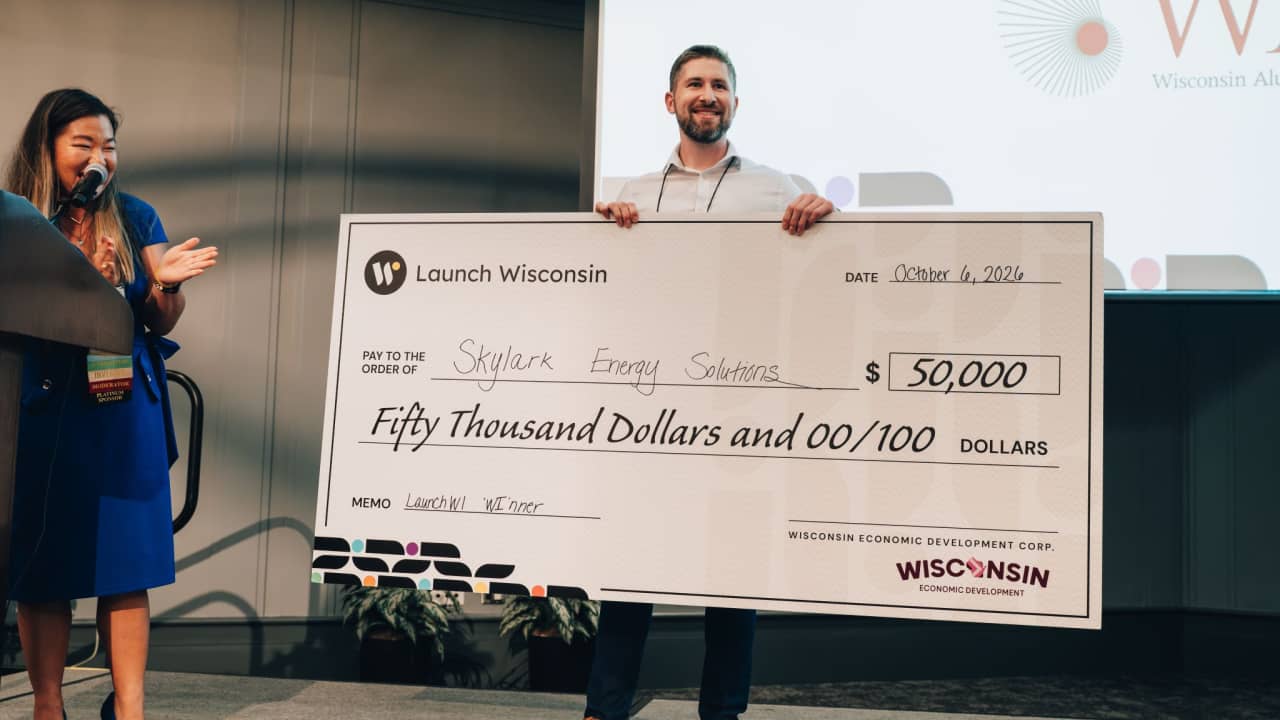
Northeast Wisconsin has a version of that problem. Of the 52 Launch Wisconsin semifinalists this year, 29 are based outside Madison and Milwaukee, including Green Bay, De Pere, and Oshkosh. The companies are here. The visibility lags.
Green Bay has a seat at the finals, too: LinkLocally made the Launch Wisconsin Diligent Dozen.
Who's putting it on
Sponsors are gener8tor at platinum, Campus Catalysts, Modal, and AK Pizza Crust at gold, and Startup Wisconsin at silver, which I should say plainly since I'm the one writing this.
gener8tor is the same organization behind the frontier technology accelerator that took six Wisconsin startups in its first cohort, so it already has a Wisconsin campus footprint. A pizza crust manufacturer on a hackathon sponsor list is the more interesting entry. Supporting builders is apparently not reserved for software companies, which is a good thing in a state whose economy looks like ours.
Listed partners include Google, UW-Green Bay, the College of Science, Engineering & Technology, the UWGB Student Government Association, and the City of Green Bay.
The chapter running it lists Sachin Shrestha as president, Pitambar Pandey and Sumit Karki as vice presidents, Carlos Guzman Ramirez as secretary, Saksham Yadav and Sweta Shrestha as event managers, Maimoona Khan as treasurer, Shivam Agrahari as marketing and communications lead, and Eugene Singh as marketing coordinator.
Nine students, a 200-person event.
The weekend itself
Check-in at 8:00 AM Saturday, opening ceremony at 11:00, hacking starts at noon. Hacking ends Sunday at noon, judging and the project expo at 1:00, closing ceremony at 5:00, prizes at 6:00. More than $5,000 in prizes across the tracks. Workshops and side events haven't been posted yet.
Quiet rooms are set up for sleeping, and you can leave and come back as long as you're there for kickoff, team building, and final judging.
Applications for all three roles are at hackgb.com. Both days are on the statewide events calendar. HackGB lands during Wisconsin Tech Month's DEV Week, one of four themed weeks of tech events across the state this October.
If you've been meaning to get closer to the talent pipeline in this part of the state, this is a weekend and a sign-up form. And if you're a student who's been reading all of this thinking it sounds like something for people further along than you, that's who the mentors are there for. The Startup Wisconsin Podcast is full of people who took a first swing before they felt ready.