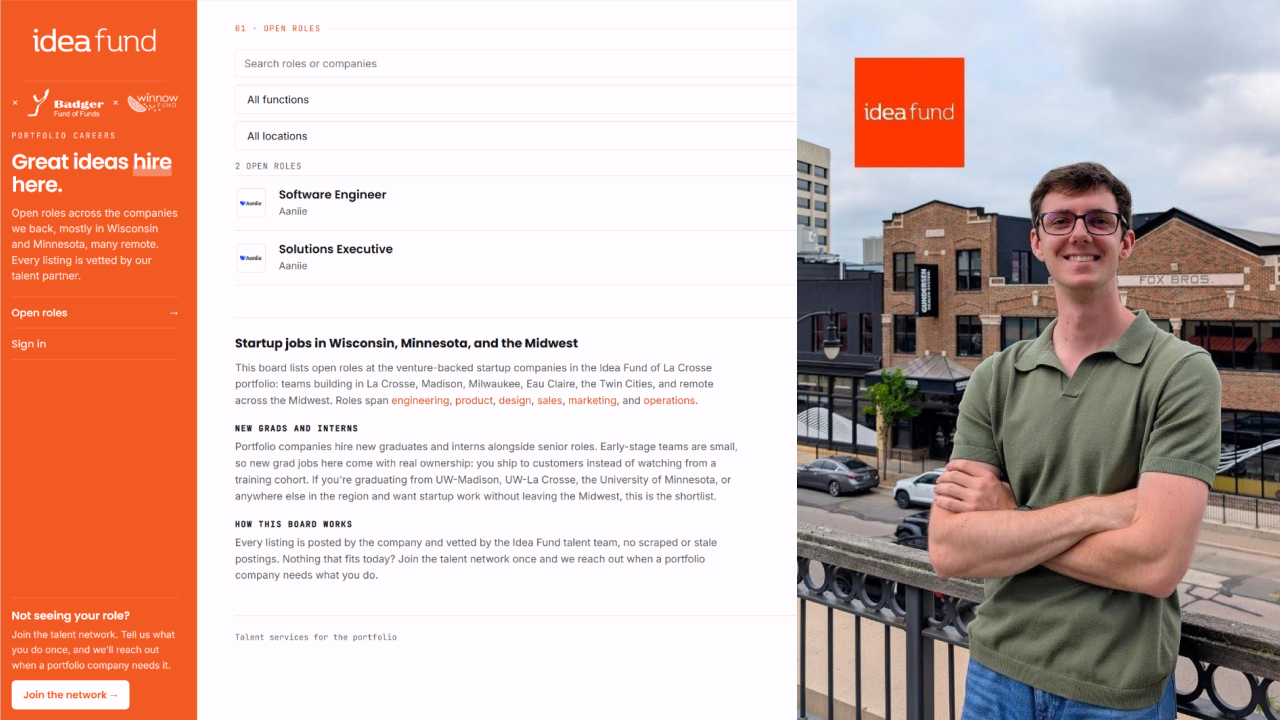

Travis Erath's announcement post for his new job opened with a question instead of a job title.
Do you feel like the work you do matters?
That is the kind of line you scroll past. It reads like something a recruiter writes when the real pitch is unlimited PTO.
Then I asked him where the question came from, and he answered with a bakery.
Where the question actually came from
In high school, Travis worked the bakery at a local grocery store. On weekends he had to be up earlier for that shift than he did for school.
One day in the middle of a shift, I felt miserable. I was tired, bored, and my hands hurt from working with frozen dough. I looked around and my coworkers had the same expression on their faces, and they were in their thirties and older. That is the part that stuck with me. It was not something they were going to grow out of.
The misery is not the story. Plenty of teenagers hate a shift job. What got him was the arithmetic. The people next to him were fifteen years further down the road and the look on their face had not changed. He was not watching a bad summer. He was watching a default.
"That was the moment I decided I needed work with a purpose behind it," he says. He went into entrepreneurship and never went back. His whole thesis fits in a sentence: "Purposeful work does not feel like work."
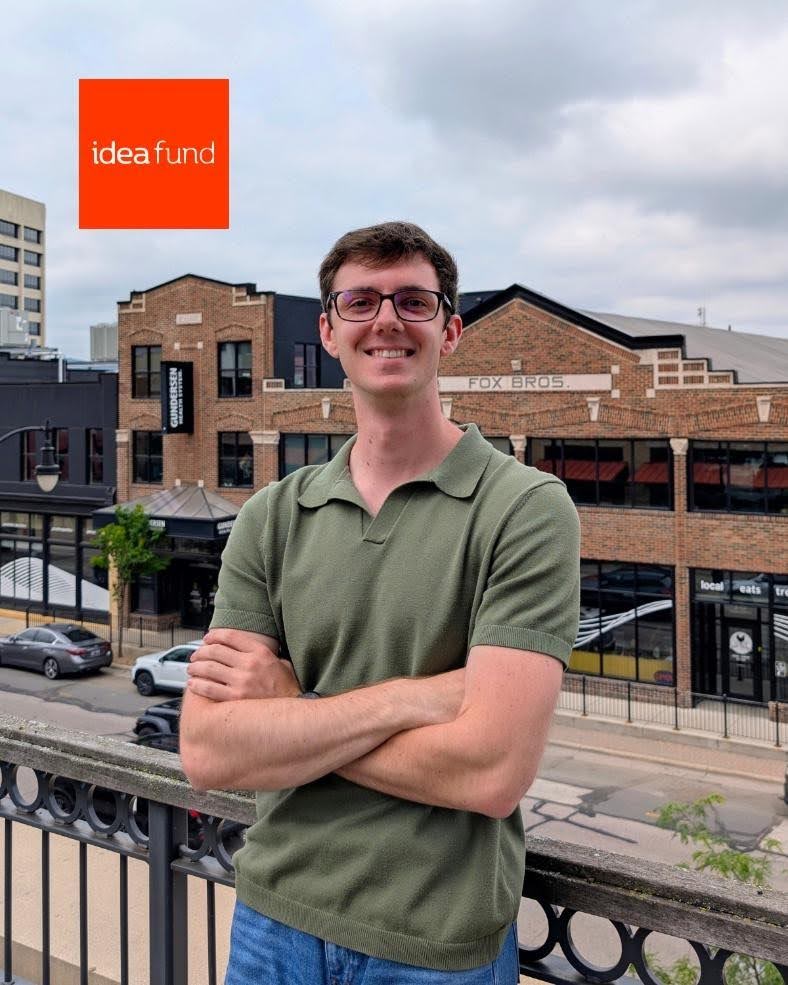
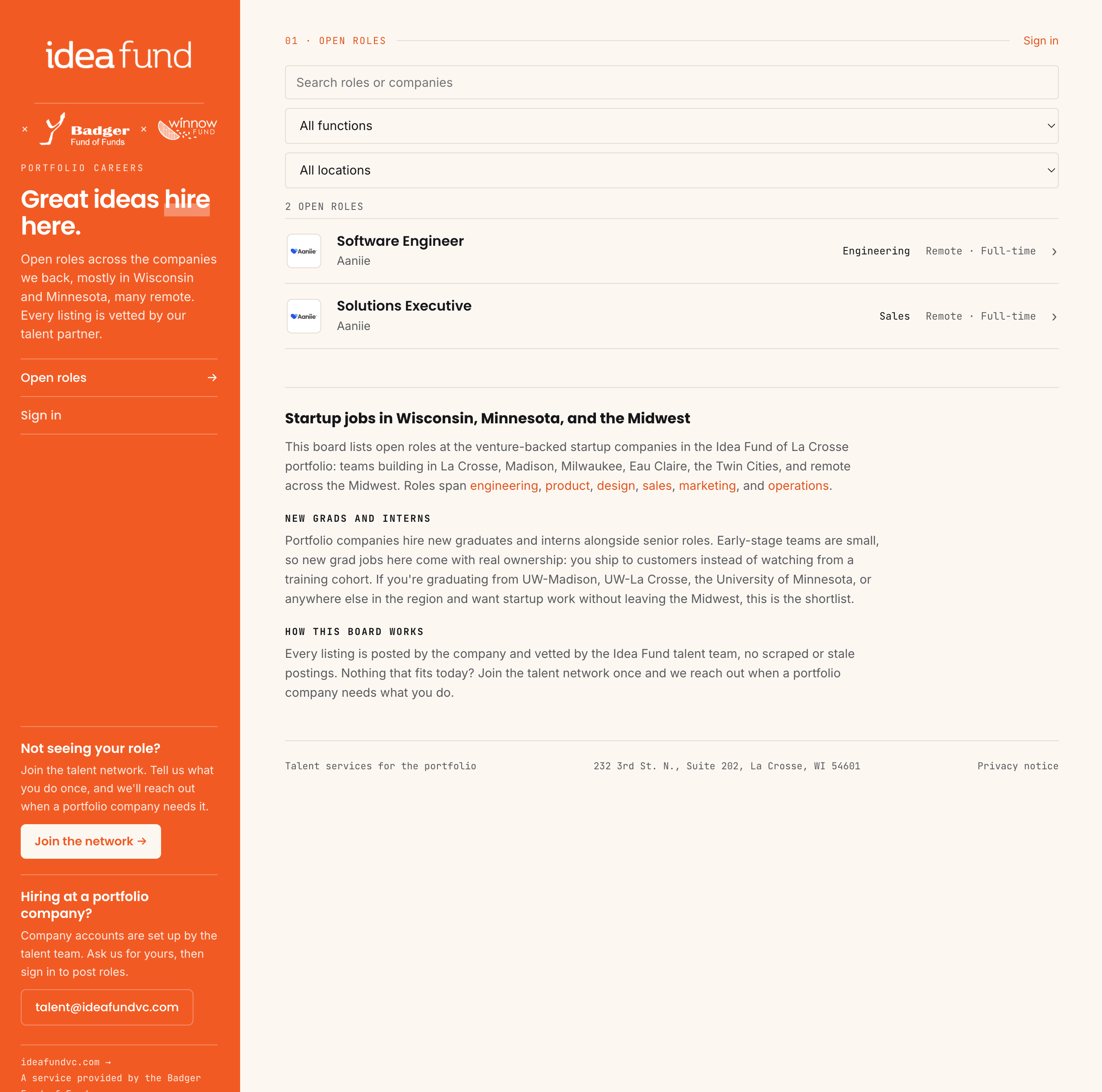
He is now the Talent Partner at the Idea Fund of La Crosse, the seed-stage venture fund that invests across Wisconsin, Minnesota, and Iowa as one of the funds in the state-backed Badger Fund of Funds. He started in July. On August 5, a career site for the entire portfolio went live. He built it.
Please, find me a job
The Idea Fund's launch post said that early and mid-career professionals keep telling Travis the same thing: the job is fine, but the work is hard to connect to anything. I wanted to know who had actually said that to him, because that sentence is easy to write and hard to source.
He had a specific person. A college friend near Milwaukee, three years into supply chain at a large energy company. He was explaining his new job to their friend group and she cut him off. "Please, find me a job!"
When I asked her why, she said she feels like a number. If she left tomorrow, it would not make a difference to her company. They would backfill her or split up the work and keep going.
Then two other people in the group said the same thing.
Notice what she is not complaining about. Not the pay, not the hours, not the manager. She is describing her own replaceability, accurately, and it is eating at her. That is a much harder problem than a bad job, because nothing about it shows up on an exit survey.
Travis is 2025 UW-Whitewater, which puts him squarely inside the group he is describing. He never took the fine-but-disconnected job, though. Nothing he found right away excited him, so he skipped the safe one, kept building RenewTowns with student co-founders and advisors, and earned a personal training certificate on the side. Two part-time jobs he cared about instead of one he didn't. He wanted to teach and he wanted purpose, so he stacked them until something better came along.
Something better came along through a friend. The friend met someone from the Idea Fund at a pitch competition, got asked whether he wanted the job, said no, and passed Travis's name along instead.
He built it before he had the job
Here is the part I did not expect. The career site did not start in July.
The talent network actually started before I had the role. While I was applying, I wanted to stand out, so I built (vibe-coded) a version of a system the job description never asked for. I knew it would create value because they did not have one. A lot of what is live today came out of that prototype.
He shipped a working prototype of a job he did not have yet, for a problem the posting had not named. Then he got the job and a fair amount of that prototype survived into production.
He is honest that the recruiting itself was not the draw. "When I first heard about this job, the hiring piece was not the part that got me excited. What got me was that I would get to build the position itself."
The rest of the month went to two things. Research, mostly on applicant tracking platforms, trying to find something that works for the employer and the job seeker at once. Those are two different users, and he says most systems only serve one of them well. And conversations: every portfolio company that is hiring right now, hiring plans worked out with the ones that are not yet, plus the other funds in the Badger Fund network so their portfolios can pull from the same pool.
Find the hill
He had options for a first project. I asked why a job board was the one worth building first, and he reached for the best metaphor in the whole interview.
I think about it like rolling a snowball down a hill. If you want a big snowball (a large pool of talent to make hiring easier), you have to find the hill. They did not have a hill, so they kept rolling the snowball around on flat ground and it kept melting.
The talent site is the hill. Every signup makes the next search faster, because the people who raised their hand last time are still there.
That is the argument for doing this at the fund level rather than leaving it to each company. A single startup's careers page is a place to post a job. It is not accumulating anything. That is fine when you are one company and expensive when you are twenty. It is the same logic Laura Strong applies to money in her episode on funding alternatives and growth capital for Wisconsin startups: pooled beats scattered, and the pool compounds.
What the vetting rule is actually buying
Every listing on the site is posted by the company and checked by the Idea Fund talent team. No scraped postings, no stale ones. That is extra work, so I asked what it buys.
We vet every posting, so the experience is consistent across every company. Whichever portfolio company you are looking at, the listing tells you the same things in the same order, and you know a real person at that company put it there.
The second half of his answer is the one operators should steal: "It also means we can improve every listing at once instead of one at a time." Learn something about how to describe a role, or how to walk a candidate through an interview process, and it goes out across the whole portfolio at once instead of company by company.
Two roles at Aaniie are live today. What he is seeing behind them is software engineering and sales, and on the engineering side that means iOS, backend, and AI work. Those are the two functions that let a small company grow quickly, which is why they show up first. Kai Heineman puts half of her evaluation weight on the team for the same reason, which she gets into in how Creative Destruction Lab builds startups without taking equity.
The objection is not the one you would guess
Travis's public pitch is that you can be a vital part of a small team chasing a big dream without moving to California or New York. I asked him where that pitch gets hard, because every pitch gets hard somewhere.
His answer was not money and it was not ambition.
There is a communication gap. A lot of people do not realize how strong the startup ecosystem in the Midwest is, or what the culture inside these companies is actually like.
It is not that people do not want this work. It is that they do not know it is here.
That reframes the job. If the gap is information, then the fix is not a better closing argument, it is a front door plus showing up in enough rooms that people trip over it. Which is what he does: events across Wisconsin, Minnesota, and Iowa at least twice a month. Angela Damiani has been making a version of this case for years about building belonging in startup communities, and it lands the same way. Presence beats persuasion.
Northeast Wisconsin has its own version of that front door in a student hackathon in Green Bay, where the mentor and judge applications are open to anyone who has done the work, not just students.
When people do push back, he points at the portfolio. Companies that grew into multimillion-dollar businesses and then exited, without leaving. Nick Myers walked through exactly that arc on a healthcare AI exit built in Wisconsin. The proof exists. It is just quiet.
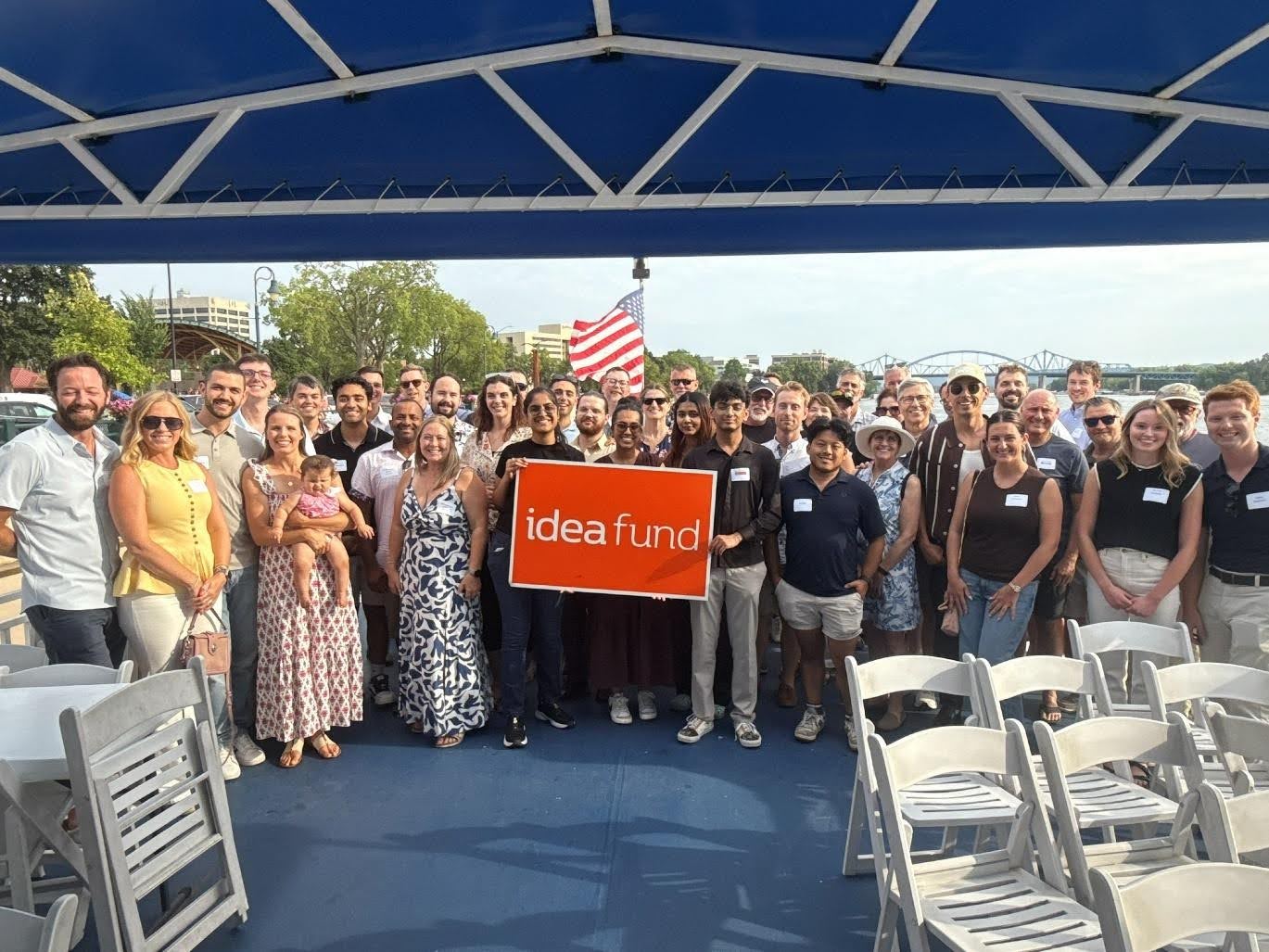
He moved to La Crosse for the role, mostly for a change of scenery after living in the house he grew up in. What surprised him is the same thing that surprises most people who actually show up.
What has surprised me is how much goes on here. There are community events constantly, and live music in the park every Thursday. It is a beautiful area and a lot livelier than I expected.
So what happens if you sign up and nothing fits?
Fair question, since a job board with two roles on it is not going to have your job on it today.
When you create an account at careers.ideafundvc.com, you are added to our talent network automatically. Part of building that profile is telling us what you are interested in, so when a company posts something that matches, you are alerted right away.
If you miss the email, you are not stuck. Both the companies and Travis search the network directly, and he runs the screening interviews himself, so there is one person on the other end rather than a queue. His actual advice is lower tech than any of that: "The best thing you can do is meet us in person."
Eight summers at a scout camp is where he figured out that mentoring was the part of work he liked most. The job he has now is a hiring system with a talent network attached, which does not sound like mentoring at all. It is closer than it looks. Both are just someone paying attention to what you are trying to become.
If the job is fine and that is the whole review, that is worth taking seriously instead of waiting it out. Get in the Idea Fund talent network or find Travis at one of the events he is at twice a month. Then go meet the rest of them. The Startup Wisconsin Podcast is full of people who left the fine job, and the statewide events calendar will put you in a room with a few of them this month.