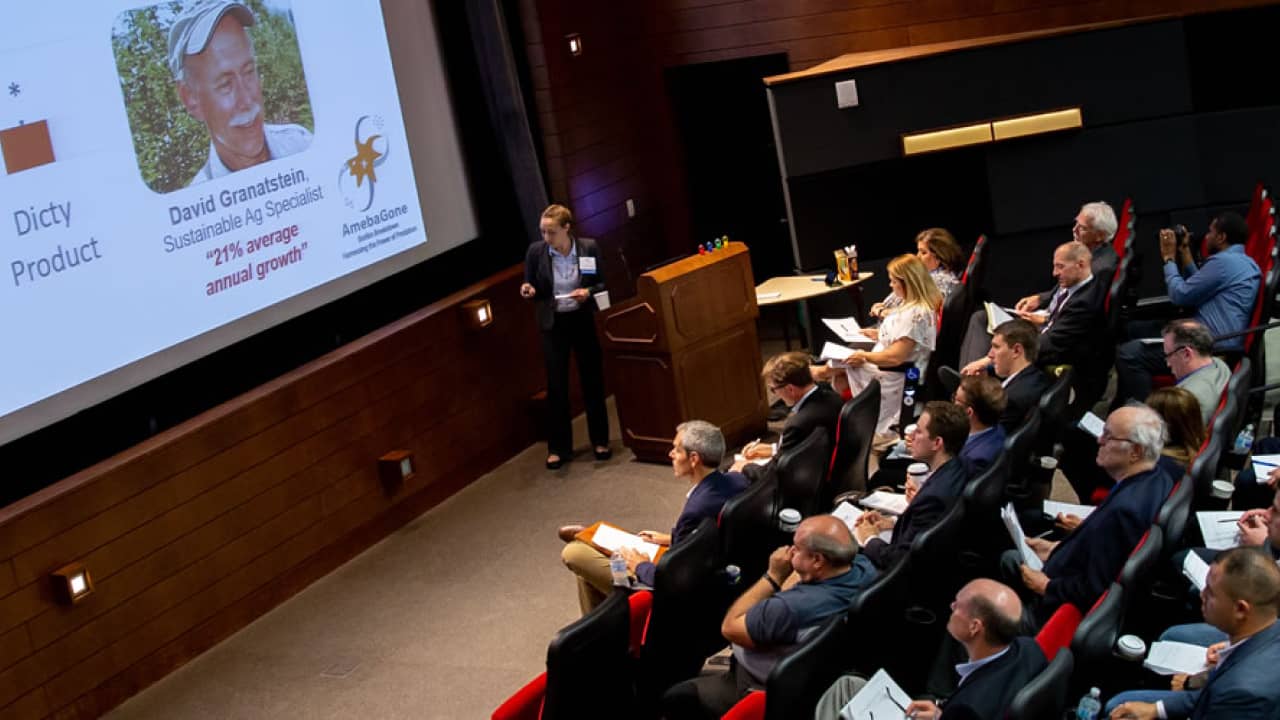

The ag and food panel at the Wisconsin Tech Summit was the quietest session of the day. It was also the most concrete.
Three Wisconsin startups. Three completely different applications of AI. All shipping product to real customers right now.
If you want a snapshot of what a Wisconsin food and ag AI ecosystem actually looks like in 2026, this panel was it.
How Vadar Alpha helps "the Julies" make billion-dollar decisions faster
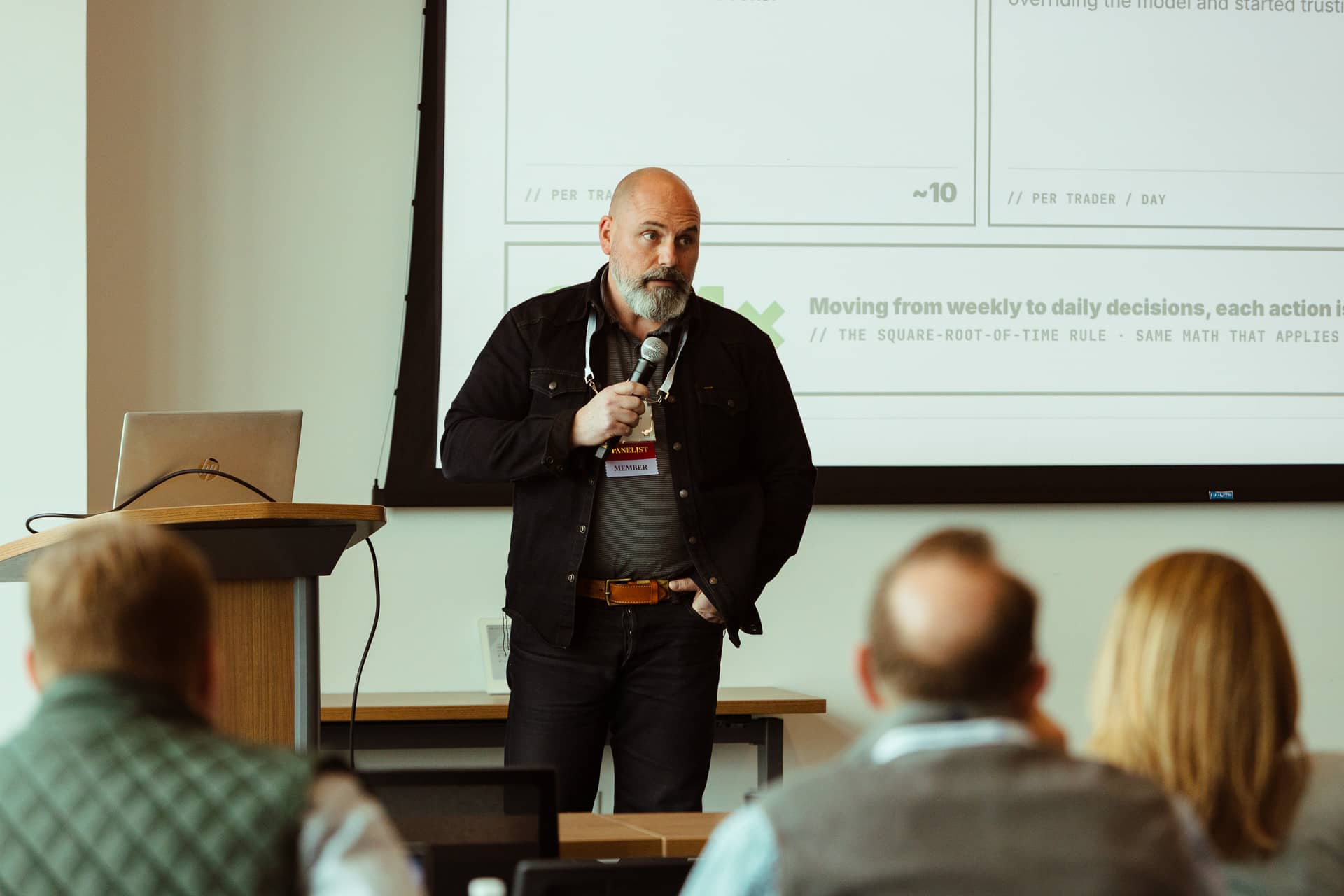
Stephen Pounds, CEO of Vadar Alpha, gave the most relatable explanation of his product I have heard at any AI event.
Picture Julie. Julie has one job. Make-or-buy decisions for cheese, milk, and powder across 30+ global locations for an $8 billion dairy operation. 23 time zones. Spot markets. Forward markets. Sales forecasts. Production capacity. Contracts. Julie does all of this in spreadsheets.
Now picture 10 Julies, all under pressure, all using slightly different versions of the same spreadsheets, all moving billions of dollars of transactions.
Anyone who has worked in operations or finance just had a small panic attack reading that.
Vadar Alpha helps the Julies do their jobs better. The product connects live public and private data sets to operational decisions that used to take a week and now take a day. Stephen made a sharp point about that shift. Going from weekly to daily decision cadence is roughly twice as valuable. Speed of decision is the unlock.
His marquee customer is Schreiber Foods, the Green Bay-based dairy giant that also appeared on the morning enterprise panel. Vadar Alpha is creating real measured ROI for Schreiber right now. Stephen is also working with Evans Network of Companies, the largest fourth-party logistics operator in the US, on dynamic quoting across 250,000 lanes per day.
Stephen relocated to Wisconsin during COVID after a career in commodity trading and a stint as head of AI at McKesson, and now builds Vadar Alpha out of TitletownTech in Green Bay, the same Packers-affiliated tech hub where Technova is based. The pitch he gave for being here was simple. He wanted to build alongside the kind of operating companies he was selling to. Wisconsin has more of those than most states.
How Technova Industries tracks food from barn to grocery shelf
Aymen Azim, CEO of Technova Industries, has one of the more unusual founder origin stories in Wisconsin tech.
In 2015 he was deploying underwater detection systems for a port in Sierra Leone when his team got attacked by pirates. Real pirates. Not the Caribbean version. The experience pushed him to build technology that could connect different security systems together without ripping and replacing the underlying hardware.
That same idea now applies to livestock barns and food supply chains.
Technova is also based at TitletownTech in Green Bay, with a branch in Paris. The company puts cameras in barns and connects them to the existing sensor network. Instead of farmers waking up at 2 AM to check on their animals, the AI watches the chickens, calculates how they are distributed across the barn, and flags anomalies. Aymen's team coined a metric called the surface repetition index. If the chickens cluster too tightly in one area, that area probably has a problem. Maybe lighting. Maybe temperature. Maybe an HVAC sensor reading wrong.
The bigger play is end-to-end traceability. From barn to processing plant to warehouse to grocery store. Technova claims to be the only company in the US able to trace a single case of food back through the entire supply chain.
That claim matters because of FSMA 2026, the new federal traceability requirements that have now been pushed to 2028. Either way, the regulation is coming. Companies that get ahead of it now are not going to be scrambling later. Technova is positioning itself as the infrastructure layer for the food companies that don't want to scramble.
Aymen has been public about why he chose to keep the company in Wisconsin instead of taking offers from the Bay Area or East Coast. The short version: community. The longer version is worth tracking down in his own words.
How Quercus Biosolutions is compressing 13 years of crop protection R&D
Jon Lightner, CEO and co-founder of Quercus Biosolutions, framed the problem in a way that should worry any farmer reading this.
It takes 13 years to bring a new chemical herbicide from first synthesis to first sale. Industry average. About $300 million in development cost. Once that herbicide hits the market, weeds can evolve resistance to it in as little as seven years.
Do the math. Evolution is faster than the chemical industry. We can't introduce new solutions fast enough to compete with weed resistance.
Quercus is using AI to design proteins instead of chemicals. The 2024 Nobel Prize in Chemistry was awarded for protein structure prediction work that turned what used to be a five-year, multi-million dollar problem into something that can be solved overnight on a computer.
That breakthrough is what makes Quercus possible. Their team partnered with an AI protein design company that had spent five years and $25 million building the toolkit for pharmaceutical applications. Quercus is the exclusive partner using it for agriculture.
The most striking line from Jon's talk: a two-year research plan completed in six months. Not predicted. Done. They are showing weed control activity at known sites of action. They are designing proteins that work alongside Roundup. And the regulatory path for biologicals is 18 months and under $2 million in studies, compared to 5+ years and $100 million for chemicals.
Quercus has research headquarters outside Madison and a satellite location in Missouri. Iowa Corn Opportunities led their seed round. If the protein platform works at scale, it changes Wisconsin agriculture meaningfully. It's the same evolution-and-AI thread running through another Wisconsin lab using machine learning to find drug targets on the podcast.
What a Wisconsin food and agriculture AI ecosystem actually looks like
Three companies. Three completely different parts of the food and ag supply chain. All Wisconsin-based.
That last part is worth sitting with for a second. None of these companies had to be in Wisconsin. Stephen could have built Vadar Alpha in New York or San Francisco given his background. Aymen turned down offers from coastal investors to stay in Green Bay. Jon could have based Quercus near any major ag belt city. They all chose Wisconsin on purpose.
The reason matters. Wisconsin has the food and ag operating companies that AI startups need as customers. Schreiber, Sub-Zero, the big dairy and food manufacturers. UW-Madison has the research talent. Local funds and accelerators like gener8tor Madison and TitletownTech are writing checks and pulling founders into the ecosystem. The regulatory accelerant of FSMA 2026 will eventually force traceability across food supply chains whether companies are ready or not.
Put it together and you get a real flywheel. Operating companies that need AI. Founders building it locally. Capital that funds it. A new College of Computing and AI at UW-Madison opening in July to feed the talent pipeline.
The summit gave us three early data points on what that flywheel looks like running at scale. Vadar Alpha helping the Julies move faster. Technova tracking food from barn to shelf. Quercus compressing decades of agricultural R&D into months.
The same event's manufacturing panel surfaced three AI deployments Wisconsin manufacturers should know about.
This is what a Wisconsin food and ag AI ecosystem actually looks like. It's not theoretical. It's already here.