How CuroNow Brings Family Caregiving Into One Shared Place




Flexible funding solutions designed for sustainable growth of Wisconsin companies.
Episode Summary
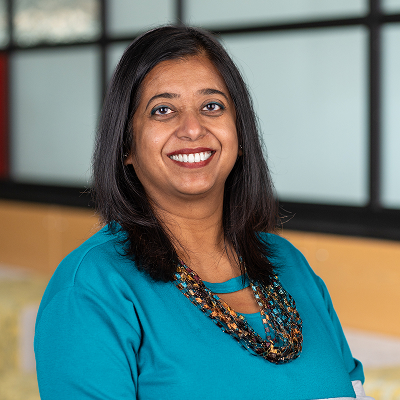
Rukmini Banerjee read an article that said family caregivers of aging parents, especially parents with cognitive challenges, carry a 40% higher chance of facing the same struggles themselves later. Her parents live in Melbourne with her older sister. Her in-laws are in India. Her siblings are scattered around the world. Her first thought was not about her parents. It was that she was doing this to her sister, the one waking up at 4:00 AM to take a blood pressure reading while Rukmini checked in by phone from Wisconsin. She still has that article saved.
That moment became CuroNow, a Madison startup building one shared place for everything that goes into caring for an aging parent: medications, providers, appointments, documents, and the small daily observations that usually disappear into a group text. This episode is for founders who found their idea inside their own life, for anyone coordinating care for a parent from a distance, and for people curious what Wisconsin's startup community actually does for a first-time founder. Rukmini and I get into why she left the C-suite at 50, how she found her co-founder Pat Setji on a hospital board, the feature families loved that they almost skipped, why privacy and HIPAA were design principles instead of a compliance checkbox, and what going through Creative Destruction Lab in Wisconsin is really like. If you want another version of this pattern, a founder building for a healthcare gap she was already standing inside every day, Christina Henderson covered it in solving the healthcare housing problem.
Key Learnings
One Article Made It Non-Negotiable
Rukmini did not set out to start a company. She read a piece of research saying that family caregivers of aging parents, particularly parents with cognitive decline, are at roughly a 40% higher chance of facing the same challenges when they get old. Her parents live with her older sister in Melbourne. She told me her head went straight to one sentence: I am doing this to my sister.
The part I keep coming back to is that she was not the one carrying it. Her sister was doing the day-to-day caregiving, anxious all night, up at 4:00 AM taking a blood pressure reading. Rukmini's role was asking how things were going over the phone. Nobody chose that split. Her sister just happened to be the one who lived closest, and the load followed geography. That is the moment she said she stopped having a choice, and she still has the article saved.
She Was Job Hunting, Not Company Hunting
In October and November of 2024, Rukmini had just transitioned out of her last role and was meeting people to figure out which company she wanted to join next. Two friends were deep in it with their own mothers and their own siblings, so she offered to spend some time finding out how their lives could be better. She has a math and computer science background, her husband is a computer science professor, and she has worked inside tech companies, so her instinct was that a tool already existed. She found things that were 60 or 70% right, always more than one, always with a workaround stapled on. She had also just turned 50, her last two roles were C-suite, and her kids were finally in middle school. Her read on it was blunt: if she did not do it then, she was never going to.
The co-founder came from a hospital board. Rukmini and Pat Setji had known each other for over six years from serving together on the UnityPoint Health Meriter board, which brings in community members rather than filling every seat with doctors. Rukmini started alone in January 2025 and figured out within two or three months how lonely entrepreneurship is after a career spent on teams. Pat's story turned out to be the same story: a mother aging in Durham, a brother who is a Duke doctor near mom, a sister in Paris, and Pat in Madison. They are yin and yang, which is exactly why it works. Rukmini is product and systems. Pat is sales, marketing, and relationships, with a deep pharma background behind her. They formalized it in the summer of 2025.
There Is Almost Never One Shared Place
I asked how families actually coordinate care today, and the answer is that there is no single answer. Rukmini describes a spectrum on both ends. The parent might be slowing down slightly or might be bedridden. The adult child might be the type A one journaling everything into Google Docs, or the one scribbling on Post-it notes stuck to a laptop because this is 2% of a life that is already 200% full. Some families share everything. Some divide it up by role, where the doctor sibling handles the hospitals and the accountant sibling pays the bills.
What is consistent is that the digital version is always plural. The Walgreens app, the MyChart app, the UW Health portal, and something else. When an emergency hits, families collapse into a group text or a WhatsApp thread, which works in the moment and then fails a month later. You cannot search it. You cannot remember whether it was the thread with the two brothers or the one with the sisters-in-law. That is the exact failure CuroNow's care hub is built against. It is the household version of a problem I have heard from the clinical side too, when a Wisconsin founder walked me through fixing the data problem slowing down life-saving drugs.
The Feature They Almost Didn't Build
This was my favorite answer of the conversation. CuroNow has a Health Tracker where you log blood pressure, weight, fluid intake, or anything else you want to add and watch it over time. They only built it because two or three people asked. The team all wear Apple Watches, so they assumed nobody would care.
It turned into one of the things people use most. Some users do not trust wearables. Some do not own them, because they are older. And there is no wearable that tracks fluid intake, which Rukmini's own mother has to capture every day. Then it happened to Rukmini herself. Her doctor wanted two weeks of blood pressure readings before adjusting a dose, so she made herself an account, logged it daily, took a screenshot, and sent it through MyChart. The dose got adjusted. She told me she has never been that organized in her life. The feature you almost cut is often the one your users were quietly waiting for.
Privacy Was a Design Principle, Not a Checkbox
Rukmini is clear that this goes past HIPAA into plain privacy, and she frames it as a design principle from day one rather than something bolted on later. A huge share of elder abuse is financial scams, so the stakes are not abstract. Early tool selection was driven by what was and was not HIPAA compliant. One full sprint went to a single behavior: when you come back to the app after leaving it, nothing is visible until you re-authenticate with Face ID. A privacy, security, and HIPAA assessment sits on the roadmap every quarter, because that work is never actually finished.
The best example of privacy shaping the product is the Vault, where families store wills, powers of attorney, and, in at least one case, grandma's favorite chicken recipe. A user asked for the feature Rukmini says she has not seen anywhere else: a toggle for physical location. You can record that a will exists and that it is in the study, second drawer on the right, without attaching the document for everyone to read. The family gets the information without the exposure. That distinction is the whole product in miniature.
Three Parties Who Have Never Been in the Same Room
Families came first with the consumer app. The first home care agency pilot started in early June. In a home care situation there are three interested parties: the agency, the aide who actually walks into the house, and the family who wants to know what happened. All three talk one-on-one and never together. The bigger agencies with good EMRs do have family portals, with what Rukmini describes as incredibly low utilization, and the aide is never part of them at all.
Today the flow is one direction: agency and aide reporting to family. What nobody has built is the family saying "I visited mom over dinner last night and noticed this," so the aide walks in Friday morning already knowing, and can answer that yes, they noticed it three times over the last few weeks too. Right now aides respond to an end-of-shift SMS about how the shift went and how mom or dad's mood was. SMS is easy and nobody has to learn anything, but the mechanism is not HIPAA compliant, so the information cannot get richer than a mood when a client just spent three days in the hospital. That is why an aide app is next. Rukmini puts it as moving from a compliance orientation to a personal one, telling the person who spends the most hours in that house that their voice matters.
What CDL Actually Feels Like From the Inside
CuroNow went through the Health and Wellness track at Creative Destruction Lab in Wisconsin and graduated this summer. The program runs in eight-week cycles. You state where you are and what you plan to do next, mentors meet with you in small groups and then discuss you in a large one, and at the end they either raise a hand to work with you for the next eight weeks or they do not. Rukmini's read on a no is generous and correct: it does not mean the idea is bad, it means nobody in that group of 80 to 90 mentors is the right match for what you need right now. She was, as far as she knows, the only Madison-based team in a room that included companies from England and Canada.
She was also honest that it is scary. Her word for it was Shark Tank-y. You sit in the room while 80 or 90 mentors talk about your business in front of you, which she found fascinating and nerve-racking at once, especially watching people extrapolate your one sentence twenty steps out based on their own experience. Every session, one or two companies dropped off. Getting accepted is not the same as graduating. If you want the program explained from the other side of the table, Kai Heineman walked me through how Creative Destruction Lab builds startups without taking equity.
Nobody Warned Her About the Part With No Off Switch
I asked what she wished someone had told her before she started. She has always pushed herself hard and always worked through vacations, so she thought she knew what she was signing up for. This is different. There is zero switch off. Even out drinking with friends, the conversation finds its way back to CuroNow. In the same breath, she called it the most fulfilling work of her career, and the first time she has built a product she genuinely wants to use herself.
The other half of that answer is the ecosystem. Rukmini gave a huge shout out to Madison and to Wisconsin more broadly, and she was specific about why. She has seen startup ecosystems that are cutthroat. This one is an all-ships-rise place, not one that picks two gems and ignores the rest, and she believes she can call anyone she has met even once over drinks and get a real conversation. That is the same thing Angela Damiani and I talked about in building belonging in startup communities. It also runs all the way down to the aides, who Rukmini says get into caregiving because of their heart, the way teachers do, in a job that is genuinely hard and genuinely underpaid. Building for them is the same instinct as building for her sister.
Transcript
[00:00:00] Rukmini Banerjee: family caregivers who care for aging parents, especially people with cognitive challenges, they are at a 40% higher chance themselves of being challenged when they grow old.
[00:00:16] Rukmini Banerjee: And my parents live with my sister in Melbourne. She's older than me. And I read that article, and my head immediately goes to, "I am doing this to my sister."
[00:00:27] Rukmini Banerjee: She is the older one. She is doing all of the day-to-day caregiving. She is anxious all night. She's waking up at 4:00 AM to take the blood pressure.
[00:00:36] Rukmini Banerjee: My role is mostly asking them on the phone
[00:00:39] Rukmini Banerjee: And so that was the moment. I, I have that article saved. It's like, I have to do something about this. That's the least I can do
[00:00:47] Hey everyone, and welcome back to the Startup Wisconsin Podcast, a show where you can learn about Wisconsin's growing tech scene through stories of startups, founders, investors, and the talented people making it all happen. My guest today is Rukmini Banerjee, Co-Founder and CEO of CuroNow in Madison.
[00:01:06] Rukmini spent her whole career inside other people's companies, CUNA Mutual, Fetch Rewards, and Vouch Insurance. She never planned on being a founder. Neither did her co-founder, Pat Setji. Then she read an article about what caregiving does to the people doing it, and it stopped her. She was living this experience.
[00:01:27] Her parents live in Melbourne with her older sister. Her in-laws are in India. Her siblings are spread across the world, and she realized her sister was the one absorbing all of it, waking up at 4:00 in the morning to take a blood pressure reading while Rukmini checked in by phone from Wisconsin. If you haven't heard or seen CuroNow, it's one shared place for everything that goes into caring for an aging parent.
[00:01:51] Medications, providers, appointments, documents, and the small everyday observations that usually get lost in a group text. They like to call it a connection app, not a scheduling app, and that distinction shapes most of what they build. They started with families and a consumer app, and this summer, they moved into pilots with home care agencies, where the goal is getting the agency, the aide, and the family into the same place for the first time.
[00:02:21] We get into what families actually use once you hand them the tool, including one feature they almost didn't build. We talk about privacy and HIPAA as a starting point instead of a checkbox. She was kind enough to share what going through the Creative Destruction Lab in Wisconsin is really like, and she's honest about the thing nobody warned her about.
[00:02:42] All right, folks, let's get into it
[00:02:45] Jacob Miller: So first question, I just want to go jump right into your backstory. Let's start with like what sparked all of this? Where did CuroNow come from? Was there a moment in your life?
[00:02:55] Jacob Miller: Let, let's, let's unpack that a little bit.
[00:02:58] Rukmini Banerjee: Okay. so it started from our needs of where I am, where all my friends, colleagues, where Pat is. Pat Setji is, uh, my co-founder. Where, um, we are with, um, busy lives, kids at home, far away from parents, and parents are growing old. So that describes the environment and the situation when, uh, when I'm talking to people in the first 10 minutes, the stress of staying on top of all of this.
[00:03:32] Rukmini Banerjee: Because the, the thing is, as we are planning our lives, we plan, we understand, we think three steps ahead. When we are having kids, when the kids are growing up, it's a little bit known and planned. Most of it is not, but a little bit. When parents grow old and something happens, a health event or a financial event, it is almost always unknown, unplanned, and a surprise.
[00:04:00] Rukmini Banerjee: And that, when you try to add what more needs to happen because of that to an already oversubscribed life, that adds a level of stress. Everybody, the moment you meet someone who you're a little bit close to, starts talking about that because that's their day-to-day. So that was the backdrop of I- I'm going through this.
[00:04:23] Rukmini Banerjee: My parents actually live very far away in Australia.
[00:04:26] Jacob Miller: Okay
[00:04:27] Rukmini Banerjee: Um, my in-laws very far away in India, and the siblings are all distributed across the world. So how do we all stay connected with the parent, with what's happening there? One of them has a home care person, companion care comes in. How do we stay connected with them, and how do we stay connected with each other?
[00:04:47] Jacob Miller: Yeah
[00:04:48] Rukmini Banerjee: That was the genesis of Let's Do It. Um, it's interesting you asked me the moment. There was actually a moment, uh, that I always think that is when it became crystal clear I don't have a choice, I have to do it. I read an article that said family caregivers who care for aging parents, especially people with cognitive challenges, they are at a 40% higher chance themselves of being challenged when they grow up, when they grow old.
[00:05:23] Rukmini Banerjee: And my parents live with my sister in Melbourne. She's older than me. And I read that article, and my head immediately goes to, "I am doing this to my sister."
[00:05:34] Jacob Miller: Hmm
[00:05:35] Rukmini Banerjee: happens to be there. She is the older one. She is doing all of the day-to-day caregiving. She is anxious all night. She's waking up at 4:00 AM to take the blood pressure.
[00:05:45] Rukmini Banerjee: My role is mostly asking them on the phone
[00:05:48] Jacob Miller: Yeah
[00:05:50] Rukmini Banerjee: And so that was the moment. I, I have that article saved. It's like, I have to do something about this. That's the least I can do
[00:06:00] Jacob Miller: Yeah. And it's always interesting because there's only, like you said, there's only so much you can do when you're not physically there. And that's, and it's no one's fault that this is how, like you said, we plan and we plan, but things happen. Um, and also y- your older sister, it's not her fault for being the oldest.
[00:06:18] Jacob Miller: Like, she didn't choose to be the oldest, right? Like, and, or choose, you know, it's like things happen how they happen with life and choices over time, and just it is what it is. Um, but it's interesting that, like, you, you took that to heart and were like, "What can I do to make this experience different and better?"
[00:06:38] Jacob Miller: Um, which I, which I think is really cool. Uh, so I, so I, I applaud you for, like, having the courage to say, "I wanna be a person that helps make this a different experience for everyone, not, and not just me." So yeah, I think that's awesome. so I kinda wanna go into the next part of that story. You know, you, you were working at places, uh, in Madison, other more like larger startups or, or corporate entities.
[00:07:05] Jacob Miller: Um, what made you decide to, to build something new like this instead of staying inside someone else's company? 'Cause it is a leap to do that. Uh, what, what, what was going through your head and, and what was, what were the things that said, "Yes, this, I need to do this," other than the emotional aspect of it,
[00:07:22] Jacob Miller: I guess?
[00:07:23] Rukmini Banerjee: Right. one is we, we did look. I was looking because at that time, and, and this is like October, November of 2024, and I'm catching up with friends. There were two of my friends who were really struggling with both of their mom's situations and their sibling situations. Um, so, a-and, and I had time on my hands.
[00:07:43] Rukmini Banerjee: I just transitioned out of my last role. So I was looking-- The reason I was meeting so many people is I was looking for what's the next thing to do. And, and in my head, I've always worked in a company. So I was looking for what's the next company that I want to go work at? And I'm meeting all these people and these two friends of mine, um, T and M, they, they-- if they listen to this, they'll know who they are.
[00:08:07] Rukmini Banerjee: and I said, "Let me, let me take some time. Let me find out how your lives could be better." And so I did extensive searching for tools and stuff because my belief is, especially around-- So I've, I've studied math and computer science. My husband is a computer science professor. I worked at tech startups.
[00:08:24] Rukmini Banerjee: My belief is technology is at a place today it should alleviate a lot of these, niggling little things. These are not big things. And I couldn't find something that was exactly what would fit their needs. I, I found 60, 70% things a-and I found multiple things. You have to put-- do these three things to make that work, right?
[00:08:48] Rukmini Banerjee: So that was the genesis of, oh, I wish if we could do something like this. Um, and the other thing, Jacob, very honestly, and I don't know how much I've shared this publicly with people, is I, I was at that period in life. I just turned 50. I have done these very big roles across the world. The last couple of roles were C-suite.
[00:09:12] Rukmini Banerjee: I've seen the internal... And it was like, is it my time to give back?
[00:09:18] Jacob Miller: Mm.
[00:09:19] Rukmini Banerjee: My kids are now in middle school, so they're, um, it, it's like they, they've become a little easier from a, a physical demands on me. And it was like, okay, and if I don't do it now, I am probably never gonna jump into entrepreneurship after this.
[00:09:37] Rukmini Banerjee: This is like, if I have to ever do it, this is the time.
[00:09:43] Jacob Miller: Mm-hmm. Awesome. Awesome. I love it. I do know, I did get me to, get to meet your, uh, co-founder. Uh, that was at Founder Day in Madison, which was awesome to chat with you guys outside and it was a b- beautiful conversation. Um, you know, you kind of talked about entrepreneurship and, like, right now seems to be the right time and place.
[00:10:01] Jacob Miller: Um, so but neither you or your co-founder have ever dreamed of being k- entrepreneurs from, from what I've have researched. Um, and so what, you know, for both of you, like how... I guess how did that happen for both of you? Like, you know, maybe how you met, how you both decided, yep, to do this together, um, and, and worth kind of like the chase of making it a thing.
[00:10:23] Jacob Miller: Yeah.
[00:10:23] Rukmini Banerjee: Yeah. Um, it, it's, it's a little different journey for both of us. You're right though, neither of us, we're very, corporate kind of people for, for a long time, right? Um, I started actually with another friend when I first had this idea, which was like January, uh, 2025, let's do it. That's when I made the decision.
[00:10:43] Rukmini Banerjee: Pat and I have known each other for over six years now while serving on the board of UnityPoint Health Meriter. So that's how we joined in the same cohort. Um, there were three of us, Pat, John, and I. We joined at the same time. We were all trying to learn. Uh, UnityPoint's, um, Meriter's board is very interesting.
[00:11:04] Rukmini Banerjee: Um, they, they bring in a lot of community people, so it's not all doctors. Um, and it was, uh, very, very interesting learning together all of this, and we became good friends. So that's how the friendship had started. 2025 January, I am starting this. I am realizing two, three months in how lonely entrepreneurship is because I've always been part of a team.
[00:11:31] Rukmini Banerjee: This is the first time I'm by myself trying to figure this out, talking to people. How do I build a team around me? Pat's going through her own journey, and she was at a crossroads at that point. She had her own medical, uh, journey to travel. She was coming out of it positively. So now what's the next thing?
[00:11:51] Rukmini Banerjee: And then we kept talking, and she got very interested because, um, she has her mother who's aging, who lives in Durham. Um, so, a- and her siblings, her brother is a Duke doctor, so he's near mom. Her other sister is in Paris. She is in Madison. So it's the same story. So it resonated very much. She was very, very interested, and we started to talk about it.
[00:12:15] Rukmini Banerjee: She started helping out just from being a friend. And then we went, we are very yin and yang. We're like incredibly different people, and our approaches are different, and our strengths are different. So that to me is a great team-building, opportunity. So that's why I, I said, "Pat, do you wanna do this more formally?
[00:12:34] Rukmini Banerjee: Do you wanna jump in?" And this is like you give 200% of yourself. It's not like 100% or 110%.
[00:12:41] Jacob Miller: Mhm.
[00:12:42] Rukmini Banerjee: so that's when we formalized this, um, summer of 2025.
[00:12:47] Jacob Miller: Awesome, awesome. I want to move into the pro- the problem space and then, like, the, the product that you're building you know, you kind of talked about the things that were kind of broken about it, about your experience personally, and then just how other people and, maybe specifically get into, you know, how do most families coordinate care for an aging parent, and what's kind of broken about the systems that are in place today?
[00:13:10] Rukmini Banerjee: So there are two big drivers of what you need to do to do this. One is what is the parent's situation and need? And that runs the full gamut of someone who is just slowing down because they're aging or their needs are changing a little bit, to someone who is potentially bedridden and, and has an acute need, right?
[00:13:33] Rukmini Banerjee: So there is a big spectrum of what the elder person's situation and needs are. There is, the other big spectrum is, as an adult child, how involved are you and what kind of personality? So if you're the type A organized, you're probably journaling out everything and using Google Docs to keep stuff in and, uh, text threads to if you're very scattered or this is like 2% of your life because the rest of the 200% is taken up by other things, you're probably just scribbling on Post-it notes and sticking it up on your laptop, or you're writing in diaries.
[00:14:11] Rukmini Banerjee: So it's all over the place. That's the one thing we learned is this is not a, these are the two ways people do it, therefore this is the solution. There are many, many different ways people are trying to stay in the know, organized so they don't drop balls, and communicate with whoever they need to communicate at the right time.
[00:14:35] Rukmini Banerjee: And then as I started talking to families, the relationships are very, very different. Some families are very, very tight and you talk about everything and you're very transparent. Some families, especially blended families or distinctly different personalities, are very fraught with who gets involved with what.
[00:14:56] Rukmini Banerjee: So I keep all of the financial information. She keeps all the health information. And some families actually do divide it up that way. Oh, he's the doctor, so he does all of the talking to the nurses and the hospitals. I am the accountant, so I just pay the bills. So it's-- that's my learning is people-- Yes, there are some people who are doing it on paper.
[00:15:20] Rukmini Banerjee: So if at the highest level, paper versus digital. When you do paper, if you're organized, you are- you've got a journal and you've got tabs and indexes. If you're not organized, you have Post-it notes and notes written here and there. Digital has a gamut of web portals, apps, et cetera, people are using, but it's almost always multiple.
[00:15:44] Jacob Miller: Hmm.
[00:15:45] Rukmini Banerjee: There is almost never a one shared common space. The most common whenever-- what I've found whenever there is an emergency or something, what families tend to go towards is group text or group WhatsApp threads.
[00:16:00] Rukmini Banerjee: And then what I hear over time is, then information gets lost. In the moment it was fine, but now I can't search it, I can't find it.
[00:16:08] Rukmini Banerjee: I don't know which thread. Was it with these two brothers or was it with my, the sisters-in-law?
[00:16:13] Rukmini Banerjee: Can't find it. So that's the biggest issue with using tools as and when
[00:16:20] Jacob Miller: Yeah. Well, and it's such a personal experience 'cause like, you know, there could be a conversation with the full family and then like you wanna have a side convo and then things were said, like you said, like there's different channels that start within even the same tool, like whether it's, uh, iMessage or WhatsApp or whatever, and all of a sudden it's like, how do you coordinate all that?
[00:16:39] Jacob Miller: Like, oh, I thought y- I told you that. No, you didn't. Like that was o- in the thread with you and him or him and her and like all of a sudden, oh my gosh, yeah. And, but it seems like CuroNow does a lot more than just like the, like the kind of like informal communication side, you know, keep everyone up to date.
[00:16:58] Jacob Miller: It sounds like there's like understanding medications, understanding appointments, stuff like that. Like maybe talk more about that. Like how did, how did you kind of get into that space where it's a little bit more methodical and like thoughtful so that everyone has an understanding of what's going on with their a- aging parent and why those things are happening?
[00:17:16] Rukmini Banerjee: Correct. So the ethos of what we are building, the va- the main crux of the value is we wanna bring it all together. Now what is it and what is all? That's the big question, right? So we want the information to be accessible and available from the one place, and not split across my Walgreens app, my MyChart app, my UW Health portal, my something else, right?
[00:17:46] Rukmini Banerjee: So how can I have all of that information, relevant information in the one place, and how can I have all the necessary people who need to know that? Oh, my power of attorney is in a different place. So how do you have all of the information and all of the right people in the place? So that's the design of the care hub.
[00:18:07] Rukmini Banerjee: The next thing is, so we- we're working towards, and what, what we have right now is it does allow that full transparency and does allow the full storage, right? The next step that we are working on is how can I make getting this information in that place together super easy? Today you have to go and enter it in.
[00:18:29] Rukmini Banerjee: Yes, you can take a photo and you can-- and we will read it, but it's not like a backend. If I tell MyChart, "Could you just go and pull my MyChart? Could you just pull my CVS information?" So that's a one big thing we're working on. How do we make this so easy? Because at the end of the day, remember the problem is nobody has capacity and time And the little time you take out, you want to be present for your parent. You don't wanna be doing the logistics. So that ease of bringing in the data is a big piece we are working on. The other piece is now structure and surface that information at the right time contextually to the right person. So I'm not having to go in to find something.
[00:19:17] Jacob Miller: Mm-hmm
[00:19:19] Rukmini Banerjee: You, app, Curonow, you know my mom, you know her baseline, you know what's important. By now you've interacted with me to know what kind of things I'm interested in. Surface that to me at the right time. So
[00:19:32] Jacob Miller: Yeah
[00:19:33] Rukmini Banerjee: those are the two big things we are working on with the product, but we have the storage and the transparency already.
[00:19:39] Jacob Miller: Yeah. Was there something that surprised you the most about people and how they, I guess, have been using it or the, I guess, their pers- perception of, "Oh, I love this. Like, this is great. This is what I want out of it"? I'm kind of curious.
[00:19:53] Rukmini Banerjee: so we, we started with the things that we'd heard from people, right? I wish we had the meds together. I wish we had all the doctor information together. So that's what we built. We see people using it.
[00:20:05] Rukmini Banerjee: The thing that surprised us pleasantly is we have a feature called the Health Tracker, where you can go in and you can-- there are already some set things, blood pressure, weight, fluid intake, things that people typically need to measure.
[00:20:21] Rukmini Banerjee: We have those. You can add in something new, whatever you want to measure, um, and you just track that over time. We had put that in because two, three people had asked us for it. Personally, we all use Apple Watches. We have the trackers there, so we wouldn't think this would be a big thing.
[00:20:45] Jacob Miller: Yeah
[00:20:46] Rukmini Banerjee: But that's been a big thing.
[00:20:48] Rukmini Banerjee: So it, it's been very interesting to the point, and, and now I understand some people don't trust the wearables.
[00:20:55] Jacob Miller: Yeah
[00:20:56] Rukmini Banerjee: Some people don't have the wearables. These are older people. For some people, like my mom actually needs fluid intake,
[00:21:03] Rukmini Banerjee: so she has to actually capture every day. There is no wearable for that. Um, so all, all of that I get, but th-this is the funny thing is my doctor, I, I am on a regular medication of something, and my doctor goes, "Do you think we can adjust and bring down that dose?
[00:21:23] Rukmini Banerjee: Check your blood pressure. Can you let me know the last two weeks?" So I said, "Last two weeks I can't, but next two weeks I can." So I started capturing my blood pressure. I created an account for myself on CuroNow.
[00:21:34] Rukmini Banerjee: I did that. I took a little screenshot. That's all I had to do. So it's literally I, I wrote down my blood pressure every time.
[00:21:42] Rukmini Banerjee: I checked it every day. And then I took a screenshot. I emailed her through MyChart that screenshot, and she adjusted it. I didn't need to go in I felt so proud of myself. I've never been this organized ever
[00:21:55] Jacob Miller: Yeah. Is, what is... I, I'm actually curious 'cause obviously there's, there, there's the families that want the benefit of this. How do the, like what are the conversations with doctors? Like do, are they, I'm assuming 'cause obviously this is related to medical, uh, and do doctors get access to this platform as well?
[00:22:12] Jacob Miller: What, what does that look like? Or i- I guess how are they part of this
[00:22:16] Rukmini Banerjee: Yes. Right now they're not.
[00:22:18] Jacob Miller: Okay
[00:22:19] Rukmini Banerjee: One of the things we're working on is role-based access control. So we do want at some point, if you want to share a piece of the information, because we have so much built this for families. You can put in whatever, and you can put in upcoming travel. Grandkids are coming to visit, you want that in there.
[00:22:37] Rukmini Banerjee: You want people to have things to look forward to. We don't want this to be only about medical emergencies.
[00:22:44] Rukmini Banerjee: Um, but if there are subsets you want to share with people, you should be able to share at that time. But until then, you can always do what I did, take a screenshot and with
[00:22:55] Rukmini Banerjee: MyChart. The doctor's feedback has been super helpful because what doctors tell us, especially we've spoken with many, many gerontologists, and they say almost always elderly people come in with one of their adult children. They rarely come by themselves. Almost always they have other siblings who also want to know. And so they see a huge benefit. And if they are, more cognitively challenged, the more this becomes important, this family coordination. So doctors see a huge lot of value. However, the one thing they said is, "Don't introduce one more way for me to communicate.
[00:23:36] Rukmini Banerjee: My world lives in," so the medicine-centric one's Epic. that we don't have, and that, that just takes time to integrate with Epic, et cetera. But, but that's why I was so excited is I li- because you can attach in your MyChart message to your doctor, you can attach a photo or anything. So that's why I just attached the screenshot and it just worked
[00:23:56] Jacob Miller: Yeah. So I guess in regards to that, there's a couple of, uh, things going through my mind, uh, 'cause, you know, it sounds like CuroNow is a, a connection app. It's like connecting the dots for people, like with the information that's available, with the communication across the family, um, you know, screenshots of information, like whether it's photos or things, uh, events coming up.
[00:24:18] Jacob Miller: and sometimes those notes, like the context of small changes that are getting noticed sooner than later can be helpful because the whole family can chime in and say, "Eh, oh, actually, yeah, I saw Mom, Mom had an issue the other day too. Like, that's kind of weird. This must be a new pattern.
[00:24:31] Jacob Miller: Let's like talk about it or like maybe let's let the doctor know," et cetera. So I think that's really cool. Uh, like I'm thinking about all that, how it's all connected, but then there's the HIPAA stuff. Like, right, like I'm curious, are, you know, with data security and things like that, um, it's, I, I feel like it's a lot of questions there, but how do you think about how all of that works, uh, and as far as like how you're building this product and how it will expand over time and be more and more helpful?
[00:24:56] Rukmini Banerjee: I think it's very important. And, and it's beyond HIPAA. It's also just sheer privacy,
[00:25:02] Rukmini Banerjee: right? so to us from day one, that's a design principle. So number one is this is, this is not an add-on thought. This is a design principle, whatever we build. And one of the biggest things with elder abuse is financial scams and stuff.
[00:25:17] Rukmini Banerjee: So privacy, security, HIPAA compliance, they are all very, very important to this. And we have-- we keep that in mind as we are designing. Initially, the tool selections were based on things like that. What is HIPAA compliant? What is not? What can we use? What can we not? Um, a- and then we went through a period where the focus, one particular sprint was all around whenever, so you've been using the app, it's open, now you're not using it.
[00:25:50] Rukmini Banerjee: When you come back to it, it should not immediately show up. You need to re-log in with, with your face ID or whatever you use on your phone. And at that point, nothing should be visible. So all of those basic foundational things are done, but this work is never done. We also need to just, uh, so on our roadmap is every quarter do an assessment of privacy, security, HIPAA, and see if there's anything we need to shore up, uh, and continue doing that.
[00:26:17] Jacob Miller: Yeah. You, uh, the one other thing too was, um, like legal stuff. Like for example, if the person were to pass away, um, like w- uh, wills and stuff like that. H- is that, a part of the platform as well? And I guess how did, how has that been like with integration and communication? 'Cause it, there is a lot of nuance to that,
[00:26:34] Rukmini Banerjee: so we do have a feature called the Vault. So you can attach whatever document, and, and the gamut we have seen people use is they use-- they put in wills and power of attorneys, and they put in, uh, grandma's favorite chicken recipe. So it, it can be anything. Whatever document or image you want to save.
[00:26:53] Rukmini Banerjee: What we have, which I don't think I've seen in any other app, and this was actually one of user's feedback, was we have the ability to say will. And then there's a little toggle that says physical location. So I no longer attach the will to the app because I don't want everyone to see that right now. But I want everyone to know there is a will, and I want them to know where it is.
[00:27:20] Rukmini Banerjee: So we toggle to physical location. We write down in the study, second drawer on the right. But the will is not attached there. That feature I've seen many users use. So that way you know. Or power of attorney, one of the things I've done is I, I put it in, um, a- and I just say who has the power of attorney, their date of birth, and that's it.
[00:27:43] Rukmini Banerjee: Whoever needs to have that document actually has that document
[00:27:47] Jacob Miller: Yeah.
[00:28:54] Jacob Miller: Yeah. Is there, is there anything else that's coming up, uh, before we move on, um, to the next part of our conversation? Anything else, uh, coming up that you are kind of excited about to integrate into the tool that either a lot of people have been asking for, or it's just you feel like it'll be just a huge improvement, uh, overall?
[00:29:11] Rukmini Banerjee: So I think the ease of, um, inputting information. That is a very, very big focus right now. That's, that's a near term. The other thing is we're n- now in a very B2B world. Um, so our pilot is with home care agencies and their aides when they're going into the home, they're providing the care. Right now, they are responding back with an SMS at the end of every shift.
[00:29:36] Rukmini Banerjee: How was the shift overall? How was mom's or dad's mood? Now, SMS is super, super helpful and good because it's easy. Nobody has to learn anything new, and it takes, like, two seconds to respond. but SMS is not-- The mechanism of SMS is not HIPAA compliant,
[00:29:54] Rukmini Banerjee: so we cannot get richer information there.
[00:29:57] Rukmini Banerjee: Like, one of the clients was in a hospital for three days, uh, a couple of weeks ago. So the shifts after that, you want to know more than just his mood. You wanna know how the recovery is going. You wanna know how the rehab is doing, right? So what we have now got as feedback is we need a super streamlined, uh, experience for the aide that is not SMS, that is in our app so that it is HIPAA compliant, so we can make this much more richer.
[00:30:27] Rukmini Banerjee: So that's our next exciting thing.
[00:30:29] Jacob Miller: All right. Awesome. I do, uh, I did want to go into the co-founder dynamics, but I've, I've... Since you'd mentioned, uh, some of the pilots you're running, I would love to like go into that first. Um, so you're, right now you're selling to, it seems like families and agencies mostly. It seems like agencies where it's, uh, for, for piloting, just because I feel like for distribution it's a little bit easier because you can get access to more people at the same time.
[00:30:53] Jacob Miller: Um, I guess, but what, which, which kind of came first or how did you kind of go about, making those pilots happen? Where did those conversations start and what was that like for you?
[00:31:04] Rukmini Banerjee: so what came first? Families came first. We released the consumer app, uh, November of last year. October, November. So definitely that came first. That, that was our starting. That was us. We built that. Home care, the pilot started June is when our first pilot started, is last month.
[00:31:26] Rukmini Banerjee: Early June, 2nd June is when it started. the motions are very, very different. What's important is very, very different. The home care use case is very, very interesting. It is-- We have three interested parties in a home care situation. We have the agency, we have the caregiver, the aide who is actually going home to provide the care, and we have the patient's family who wants to know, uh, what's happening. And this entire group of three talks one-on-one with each other.
[00:31:59] Jacob Miller: Yeah
[00:32:00] Rukmini Banerjee: There is no solution where it is everybody together. there are a whole bunch of consumer apps which connect the families together, but it does not connect to the agency. The agencies have, the bigger ones and the really good EMRs, have a family portal with incredibly low utilization.
[00:32:23] Jacob Miller: Hmm.
[00:32:24] Rukmini Banerjee: And the aide is never part of it.
[00:32:27] Jacob Miller: Oh,
[00:32:28] Rukmini Banerjee: So it's between the agency and the family. So what we are building is unique in two ways. One, it brings all three together, which is why we're so excited about the aide app. So now everybody is in that same care hub, and everybody can see what they need to see and what they care about.
[00:32:47] Rukmini Banerjee: And the other part is giving the family this consumer app where they can put in many more things in there, gives so much richer context to the agency and the aide that they today don't have. Because today it's very much unidirectional. Whenever anybody talks about, "Oh, we have a family portal," or, "Communication is great," what they mean is agency and aide to family.
[00:33:12] Rukmini Banerjee: Telling the family, "You've hired me for a service, I'm gonna give you an update on the service."
[00:33:18] Rukmini Banerjee: What nobody has, and we are providing the platform for it, is the family is now sharing, "Hey, you had come last..." What is today? Thursday. "You'd come Wednesday. I went to visit mom over dinner last night, and I noticed this thing."
[00:33:33] Rukmini Banerjee: There is no mechanism for the family to let the agency or the aide know. Think about how powerful that is for the aide when they go in Friday morning to know, "Oh, this had happened.
[00:33:44] Jacob Miller: Mhm.
[00:33:44] Rukmini Banerjee: They, they had this little lapse when they were talking, couldn't remember." And then the aide goes, "Oh yeah, I, I noticed that three times too over the last two or three weeks."
[00:33:55] Jacob Miller: Yeah
[00:33:56] Rukmini Banerjee: That is the power
[00:33:58] Jacob Miller: Yeah, that's awesome. And also I think like, so my sister, she worked, uh, in an elder care type facility. This was years ago. But she had such a personal relationship with every single person that she took care of. And there are things that I feel like nurses, uh, or caregivers notice, um, because they're with them all the time.
[00:34:18] Jacob Miller: And things that like the s- the, the children m- might, adult children might not have noticed or just because they're not there and it's, you know, because they're not around. And, um, so I think like adding that into the loop in a more thoughtful manner is like super powerful. and you know, and it's also, and, and I think too, like a lot of the, those staff members, like they genuinely care about these individuals, um, for the most
[00:34:42] Jacob Miller: part.
[00:34:42] Rukmini Banerjee: 100%. It is super hard job, Jacob
[00:34:45] Jacob Miller: it, it tot- My sister talked about all of the, yeah, just like the grief of like be- You know, she's like, "I don't, I, I never knew these people," or, "I only knew them for a month or 90 days or whatever because of the time they were there." But like you just get to know them and you just hear about their life and their, and their story and whatever, what they like, what they don't like, and then all of a sudden you're like really clo- close with this person and then they're gone.
[00:35:07] Rukmini Banerjee: you only get into this field to be a caregiver because of your heart.
[00:35:12] Jacob Miller: Yeah
[00:35:13] Rukmini Banerjee: Because it is an incredibly hard job, and it's a fairly underpaid job.
[00:35:17] Jacob Miller: Yeah
[00:35:18] Rukmini Banerjee: So it's like teachers, school teachers. It's the same. You're doing it because you want to do it, right? So what we are hoping that by bringing the aide into this care team t- in total, will give them, um, this feeling of now I am seen and heard way more than they are today.
[00:35:41] Rukmini Banerjee: Because today, if they notice something like this, their option is if the family member is not in the home, they let the agency know. And then they won't know what did the agency do with it. Did the agency actually tell the family member? Did the family member do something about it? They don't know. So the, the aide capture of information is very compliance-driven today.
[00:36:00] Rukmini Banerjee: You were supposed to do these 10 things. Did you do these 10 things? And if you didn't, why did you not do? It's a compliance orientation. We are bringing in the personal orientation. This is a person. You are a person, and you know them intimately. You are probably spending more hours with them than anybody else is.
[00:36:20] Jacob Miller: Mm-hmm.
[00:36:20] Rukmini Banerjee: So your voice matters
[00:36:22] Jacob Miller: Yeah. Speaking of spending a lot of time with people, I want to talk about Pat, your co-founder. Uh, let's, let's talk about... So I kind of want to, um, talk about at the same time maybe, so your relationship with Pat as a co-founder, and then I, and you shared you went through the Creative Destruction Lab program.
[00:36:41] Jacob Miller: Um, and so there's a lot of that is, that is asked of you through that program. So I would love to know about like how, how have you guys kind of shared the load and where have you, where you talked about strengths earlier, different strengths. you know, maybe talk about like how you guys divide up your efforts, um, and what that looks like.
[00:36:58] Jacob Miller: And then as you went through the program, what were some of like the key decisions you guys, uh, had to make and maybe the benefits of like the forcing functions that happened through that program that you found were super beneficial together?
[00:37:09] Rukmini Banerjee: Okay. Lots to unpack there. So Pat and I are intrinsically wired differently. So I am much more product tech oriented. I get that. I understand that. I spent years with that. Um, that's my fallback systems product. Um, Pat is sales marketing relationship-building. That's naturally so. Like I was laughing, we, we met this new person, uh, this week, and Pat spent the first 30 minutes just getting to know that person.
[00:37:39] Rukmini Banerjee: She remembered their kids' names at the end of the meeting. She recalled. I said, "Pat, I would never be able to do this." I would have jumped into what are we here for? What are we doing? So we're just wired very differently. So I think over time it will become more and more separate paths of we will have to run with just ensuring we stay connected at the right times, but running separately.
[00:38:05] Rukmini Banerjee: Today, we probably overlap more because a lot of it is just constant strategy and learning and adjusting. Um, so very little is like it's purely about the sales part. It's purely about the product part. They're very intertwined. But we do have, um, that, that's a very natural and, and that's very helpful actually because also Pat comes from a very rich pharma background.
[00:38:31] Rukmini Banerjee: So her context, her understanding of that world, is very helpful when she is reaching out, um, and trying to build our pipeline, right? CDL is amazing. So anybody who's listening, if you get a chance to apply to CDL, I could not talk more highly of that program. We were in CDL-Wisconsin's Health and Wellness track.
[00:38:57] Rukmini Banerjee: We lucked into that one because that's medicine-based, so that made it very, very easy for us. But people were traveling from-- We had, uh, a company from England. We had, uh, Canadians. We had-- Yeah, so it's a worldwide program. It just happened to be in Madison. We happened to be in Madison. I think we were the only Madison-based team.
[00:39:17] Rukmini Banerjee: There were a couple of other Wisconsin-based teams. Um, it's, uh, it, it works like every eight weeks. You go in, you talk about where you are, what you plan to do for the next eight weeks, and then there are many, many mentors. You have, uh, small group sessions, then the mentors have a large group discussion.
[00:39:35] Rukmini Banerjee: And then based on mentors understanding where you are, what you need to do, they either raise their hand or they don't, saying, "I think I can help you for the next eight weeks." And that's how you get a mentor and you move to the next phase. If nobody raises their hand, it doesn't mean your idea is bad or anything like that.
[00:39:56] Rukmini Banerjee: It just means given where you are and what you need, there's nobody right now in their group of 80, 90 mentors who can help you with what you need right now.
[00:40:04] Jacob Miller: Sure
[00:40:05] Rukmini Banerjee: That, I think, was the best thing in the design of the program. Because they did not force us to do what they wanted us to do. They didn't force us into a process.
[00:40:20] Rukmini Banerjee: We were where we were. We de- decided and said, "In the next eight weeks, these are our goals. This is what we want to get done." They do give us feedback, and they say we can, um, refine those objectives sometimes. "Okay, you're not understanding. That's way too ambitious." Or sometimes it's, "You gotta push yourself a little bit more."
[00:40:38] Rukmini Banerjee: Um, so they refine the objectives. But we had for every one of the four sessions, we had different mentors based on what we were trying to do and what their expertise and strengths were. And that is very unique to this program. And to me, that's CDL meeting us where we are and what we need. Sometimes we had more salespeople, sometimes we had doctors, sometimes we had marketing people.
[00:41:06] Rukmini Banerjee: Sometimes we had techy people who helped us when we were trying to do the roadmap and stuff, and they said, "Okay, I can help you. I can look at this and I can give you feedback."
[00:41:15] Jacob Miller: Yeah, that's awesome. Is there a certain aspect that surprised you? I mean, you kind of talked about that being really powerful, but were there things that surprised you, uh, going through? 'Cause it's a, I believe it's one year, right? It's
[00:41:27] Rukmini Banerjee: Yeah.
[00:41:28] Rukmini Banerjee: Yeah. He just graduated out this summer.
[00:41:30] Jacob Miller: Yeah
[00:41:31] Rukmini Banerjee: The whole thing was a surprise. This was the first time we were together in an accelerator. I had done one by myself prior to Pact, which was a Summit Credit Union StartingBlock Women's Entrepreneurship Program, but that's not-- That, that was more like a foundational fundamental.
[00:41:48] Rukmini Banerjee: I was just starting out, what are the basics, et cetera. This one was the first accelerator-type program, so everything was a surprise. Biggest surprise was how fast eight weeks go. It is like, oh my God, we just had this, we just set the objectives, now we're talking about the next phase's objectives, and we should have done this.
[00:42:10] Rukmini Banerjee: Does it force us to move in a very disciplined way faster? Absolutely. Like, it's an accountability mechanism, but eight weeks goes very fast. So that was one surprise. The other surprise was it is scary. In a way, it's a little bit Shark Tank-y. Like, you go in and yes, I know it's all for the right things.
[00:42:32] Rukmini Banerjee: You have all these discussions, you share what you're doing, and then you sit in the room while 80, 90 mentors talk about your project, your business, what they think will work, what they think will not work. That's fascinating to hear. Oh, when I had said this, this is what they took out of that.
[00:42:54] Jacob Miller: Yeah, yeah.
[00:42:55] Rukmini Banerjee: It was fascinating.
[00:42:57] Jacob Miller: Are you even listening to me right now? Yeah.
[00:43:00] Rukmini Banerjee: but it's so interesting like, oh, when I say this, I'm thinking this, but they are extrapolating it out
[00:43:07] Rukmini Banerjee: 20 times based on their experiences.
[00:43:10] Rukmini Banerjee: Um, and then at the end, there is a tension point of will they-- will someone actually raise their hand and say, uh, they will mentor us? Because if you get no hand raises, and every time there was one or two companies that dropped off.
[00:43:25] Jacob Miller: Hmm.
[00:43:26] Rukmini Banerjee: So it is not like you got accepted into CDL last summer means you will come out of CDL at the end of the pipeline.
[00:43:34] Rukmini Banerjee: Well, I mean, I mean, the reality is that like, the, the structure of how CDL works, uh, so I actually have an episode, uh, with someone from their team, uh, Kai. Uh, I interviewed her just to learn about the program. Yeah.
[00:43:47] Jacob Miller: So yeah, that's awesome. Yeah, I kind of figured 'cause that was kind of her track, so like I was like, "Oh," you know, and it's, it's interesting 'cause like their whole model is like very philanthropic, so it's like these people are, you know, putting themselves out there to, to help you out.
[00:44:01] Jacob Miller: And it's like, you know, so it's kind of like, it's kind of like common courtesy to say, "Hey, I'm gonna be really focused." Entrepreneur- entrepreneurship is also difficult, so it's like you can't just assume that, "Hey, someone's gonna ho- take my hand and walk me through this whole thing." Like some accelerators are like that, but at the same time, that's not who they like to work with.
[00:44:22] Jacob Miller: Like they want to work with people that are the, the right fit, like they're kind of a founder, a founder fit basically for the problem space. And then they know that like this person can do what it takes to solve this problem in a timely manner. And so that like friction and that pressure, um, is super necessary to like make sure that is good.
[00:44:41] Jacob Miller: And also like, you know, for them managing all those mentors and all those connectors and corporate partners, like they want to make sure that like they feel like they're getting value too in that their, their contributions feel like positive and beneficial versus just like, "Hey, every founder you've brought through here, like they're kind of not really doing much.
[00:44:59] Jacob Miller: What's the deal?" You know? So
[00:45:00] Rukmini Banerjee: Yeah. No, totally. I
[00:45:01] Jacob Miller: I
[00:45:01] Jacob Miller: totally get that. So like, you know, I think the filter that they do is like super great, um, and necessary and 'cause entrepreneurship isn't for everyone. Like you could have a great idea, but like again, it's like the founder fit is like super, super important.
[00:45:15] Rukmini Banerjee: great experience. And, and I think the quality of mentors, Jacob, was mind-blowing.
[00:45:20] Jacob Miller: Yeah
[00:45:21] Rukmini Banerjee: Mind-blowing. Uh, it was like sitting in a little town medicine to have access to all these experienced minds who are willing to help us out like this is, I, uh, we were humbled through this
[00:45:37] Jacob Miller: Yeah, that's awesome. as we kind of wrap up, I just want to talk about Madison a little bit. Uh, we have a little bit of time left. Um, you know, how, how did you leverage your connections in Madison? You, you worked at a couple different places Ma- in Madison. One of the companies you worked for is based out of San Francisco as well.
[00:45:53] Jacob Miller: You've obviously been around the world a little bit. maybe talk about how your, your presence in Madison, you talked about CDL obviously, but maybe outside of CDL, like how do you feel like Madison has been beneficial to you, uh, and to Pat and the s- the progress that you've made, uh, as an, as a new startup?
[00:46:12] Rukmini Banerjee: Huge shout out to the Madison community. I don't think we c- we would have been where we are today without this ecosystem of Madison, Greater Madison, Wisconsin overall. Um, I, I put you into that, like you're Green Bay. You're part of that Wisconsin ecosystem. It is thriving, it is growing, and it is the most supportive start- startup ecosystems are not always supportive. They can be super cutthroat, super competitive. I have seen different ecosystem vibes. This is one of the most supportive, where genuinely everyone wants you to succeed. It's a very, um, all ships rise is better kind of thing, not I'm gonna find the two gems and I'm gonna give my all to the two gems and not the rest.
[00:47:18] Rukmini Banerjee: And I personally, that's how I'm wired, so I love that. And I do not think, like, I think I can pick up the phone with anyone I have met even once over drinks somewhere, and they will have a conversation m- with me, and they will help me if they can. I, I have that confidence
[00:47:40] Jacob Miller: what's one thing that you wish someone would've told you before you started this whole journey?
[00:47:45] Rukmini Banerjee: It is a commitment. It is, it is hard. There is no switch off. So I, I have always pushed myself hard. I have always worked through vacations. I- it's something that comes naturally to me. This is different. There is zero switch off. It-- this is all I'm thinking about, even when I'm going out drinking with my friends. There will be conversations about CuroNow, something related to this. So that has been, a learning and a journey for me. However, in the same breath, I would say this is super fulfilling. Like, this feeds my soul. This is the first time I am working on a product that I really, really want to use. Up until now, my career has been with, okay, I, I will get the process and the operations and the sales and, and the efficiency and the effectiveness.
[00:48:53] Rukmini Banerjee: This is about helping the end user. And if they get help-- Like, this kind of fulfillment, nobody had talked to me about. Like, in general, you understand, yes, founders, entrepreneurs must love what they do. Otherwise, why would we have serial entrepreneurs? But this I have lucked into and oh my God, am I grateful.
[00:49:14] Rukmini Banerjee: It is incredibly fulfilling
[00:49:16] Jacob Miller: Hmm. That's awesome. I lo- I love that. I love that for you and, uh, I'm, yeah, I'm, again, I'm excited for you because like you said, it's, it's one, it's like, oh, I can... This is a business I can build, but it's also extremely beneficial to, to pe- other people in the world.
[00:49:32] Rukmini Banerjee: Yeah. And someday for us, Jacob, when we grow old, someday
[00:49:36] Rukmini Banerjee: we grow,
[00:49:37] Jacob Miller: gonna want this. Yeah.
[00:49:38] Rukmini Banerjee: it will benefit us
[00:49:40] Jacob Miller: That's right. And I'll be like, "Hey, I know the, the person that started it all." Or the-- I should say the two people. I don't wanna... Yeah. Um, that's awesome. Uh, the last thing I wanna say is, you know, as you're, as you're still growing and building this product and business, what connections, you know, if someone's watching this, uh, what kind of connections are you looking for right now?
[00:50:00] Jacob Miller: You know, are you looking for talent to help grow your team? Are you looking for opportunities for new pilots? are you looking for feedback on the product? Like, what would be good connections for you right now in this, the current phase of, of CuroNow?
[00:50:12] Rukmini Banerjee: That's a great question. so this is my ask. If you are a consumer, go download our app. It's free. Start using it, give us feedback. The more feedback we get, the better we will build this for you, right? So absolutely, please start using it. Um, if you are peripherally even caring for elder people, this is a great fit.
[00:50:34] Rukmini Banerjee: If you're in the thick of it, it's a great fit. Even if not, like I give you the example, I created an account for myself and I used it. Um, I have a couple of friends who are using it for their kids. so it, it's a coordination communication all in one place app that makes it easy. So we would love for you to download it.
[00:50:51] Rukmini Banerjee: App Store, Play Store, so Google, Android, uh, and, uh, i- Apple Store. and then if you are a home care agency or you know an owner operator, we would love a warm introduction. Without warm introduction for a pilot, so it's a zero cost pilot that we are-- We're still offering a couple more slots right now to do zero cost pilots.
[00:51:14] Rukmini Banerjee: It's very low lift for them, and it gives them real information with their clients, their aides. And if it's helpful for them, only then we move into contracting. So I would love for warm intros. Without warm intros, we go nowhere.
[00:51:30] Jacob Miller: Mm-hmm.
[00:51:32] Rukmini Banerjee: So that would be really helpful for us.
[00:51:34] Jacob Miller: Awesome. Well, I'm glad, I'm glad, you know, we can be a platform for that and to help get the word out and, um, you know, best of luck to you and Pat on your journey as you continue to, to solve this, like, really, really important problem, um, and, uh, and make an impact. Um, and I, and I love that and excited for both of you.
[00:51:50] Jacob Miller: So, um,
[00:51:52] Rukmini Banerjee: Thank you so much. We appreciate that, Jacob. Everyone's best wishes. Thank you.
Show full transcript
Subscribe
Get updates on future episodes, events, and more from our newsletter.
Listen On



Show Notes
(00:00)
Introduction
(02:42)
The personal story behind CuroNow
(07:05)
Why Rukmini became a founder
(10:01)
Finding the right co-founder
(12:47)
Why family care coordination breaks down
(16:20)
Creating one shared care hub
(19:39)
The feature families use most
(21:55)
Supporting doctors without adding work
(24:56)
Privacy and HIPAA by design
(26:17)
Storing documents in the Vault
(28:54)
Building for home care agencies
(30:29)
Connecting agencies, aides, and families
(36:22)
Co-founder strengths and roles
(38:31)
What Creative Destruction Lab taught them
(45:37)
Madison's supportive startup community
(47:40)
The reality of entrepreneurship
(50:00)
How to support CuroNow
Related from Startup Wisconsin
A healthcare AI exit built in Wisconsin
Evolving the path to entrepreneurship at StartingBlock in Madison
Show Notes
(00:00)
Introduction
(02:42)
The personal story behind CuroNow
(07:05)
Why Rukmini became a founder
(10:01)
Finding the right co-founder
(12:47)
Why family care coordination breaks down
(16:20)
Creating one shared care hub
(19:39)
The feature families use most
(21:55)
Supporting doctors without adding work
(24:56)
Privacy and HIPAA by design
(26:17)
Storing documents in the Vault
(28:54)
Building for home care agencies
(30:29)
Connecting agencies, aides, and families
(36:22)
Co-founder strengths and roles
(38:31)
What Creative Destruction Lab taught them
(45:37)
Madison's supportive startup community
(47:40)
The reality of entrepreneurship
(50:00)
How to support CuroNow
Related from Startup Wisconsin
A healthcare AI exit built in Wisconsin
Evolving the path to entrepreneurship at StartingBlock in Madison
Listen On
Listen to more episodes


Never miss an episode. Discover hard-to-find tech and founder events.
We dig up what's going on every month so you don't have to.
Get updates on exciting new podcast interviews, events, startup programs, accelerators, resources, and pitch contests happening in Wisconsin.
Choosing a city only tells us the region you live in.
It does not mean you only get updates for that city.
Have questions? Ask away.
hello@startupwi.org


